

The benevolent love the mountains for their stability and natural beauty, which nurtures all living things. The wise love the water for its ceaseless flow, bringing new life with each generation. "The wise delight in water, the benevolent delight in mountains." In today's world, numerous landscapes of mountains and water are captivating. For Mok Wai Leung (founder and design director of the Xuanguang brand), what we should contemplate in modern society is: "What do we truly love?"
Like attracts like, and people tend to group together based on similar traits and shared thoughts. The wise and the benevolent each have their own preferences, thus they exist in environments that resonate with their characteristics. Benevolent individuals often remain steadfast in their principles, as unwavering as a mountain, and they calmly cultivate their inner selves amidst external disturbances, which leads to a longer life.
Wise individuals, on the other hand, keep pace with the times, adept at change, continuously evolving like flowing water. They are not constrained by established values, allowing them to live joyfully and authentically. Everyone has their own pursuits, and applying the same values to everyone can lead to problems. "Do benevolent people really live long? Are wise people truly happy?" In an open society, understanding one’s own goals and how to live is crucial. This is particularly important in today’s learning environment, where intense competition among peers is fostered from a young age, coupled with older generations overly emphasising income and material life as standards of evaluation, which inadvertently erases individual differences and impacts many people's lifelong happiness and joy.
From another perspective, the environment plays a significant role in shaping personality. Growing up by the water or in the mountains undoubtedly influences one's character. In the past, during the era of hereditary skills and trades, the impact of the environment often outweighed that of education. However, how should one’s inner pursuits be realised?
Confucianism was not the most popular school of thought during the Spring and Autumn and Warring States periods. At that time, various philosophies flourished simultaneously, and thinkers resonated with their listeners through words and texts, inspiring a pursuit of what they loved. When modern interpretations of "The wise enjoy water, the benevolent enjoy mountains" arise, we should reflect: "What do I truly like?" Is it only after striving with all our might that we realise the things we pursue are not what we genuinely desire? To experience the joy and pleasure of life, one must first understand oneself and create an ideal process to attain true happiness.
In guzheng music, many pieces express and portray the beauty of mountains and waters. Take the guzheng technique "Huazhi" for example, it has captivated countless people with love for this Chinese instrument. Through the plucking of one string, "Huazhi" mimics flowing water, while the plucking of another string, known as "Guazou," imitates wind and rain. Although these techniques may not differ significantly, the feelings they convey are worlds apart. I hope that when everyone listens to or performs these guzheng works, they can feel the essence of mountains and waters in the music, understand their own pursuits, savour the joys of the world, and discover what they truly love in their hearts.
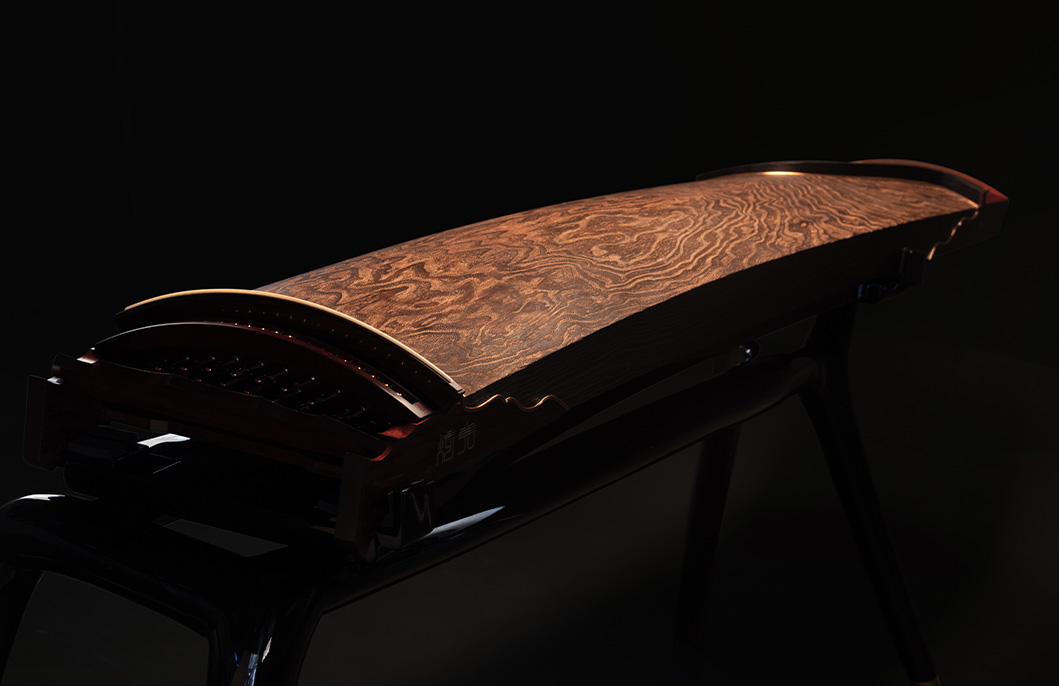
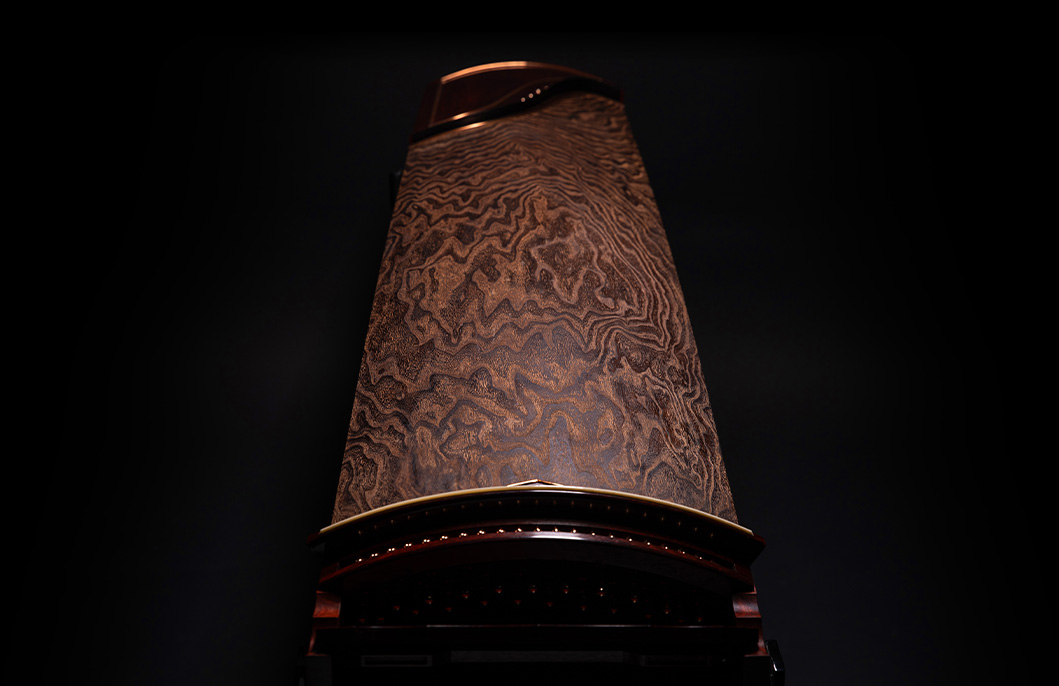
Meticulously crafted over four years, the dazzling collection "Yue Shan Le Shui" embodies the consistent tradition of "dazzling light." It draws from the precious resources of nature to create a rare treasure in guzheng. Using Japanese paulownia wood with nearly seventy years of growth combined with over a century-old Indian rosewood, it has resulted in the exquisite and unique guzheng—"Joyful Mountains and Flowing Water."
In the pursuit of sincerity and simplicity in guzheng artistry, "dazzling light" showcases top-quality materials, avant-garde design, and exceptional craftsmanship, culminating in the creation of "Yue Shan Le Shui"" and "Le Shui Le Shan" (to be launched soon)—two astounding, one-of-a-kind guzheng treasures.
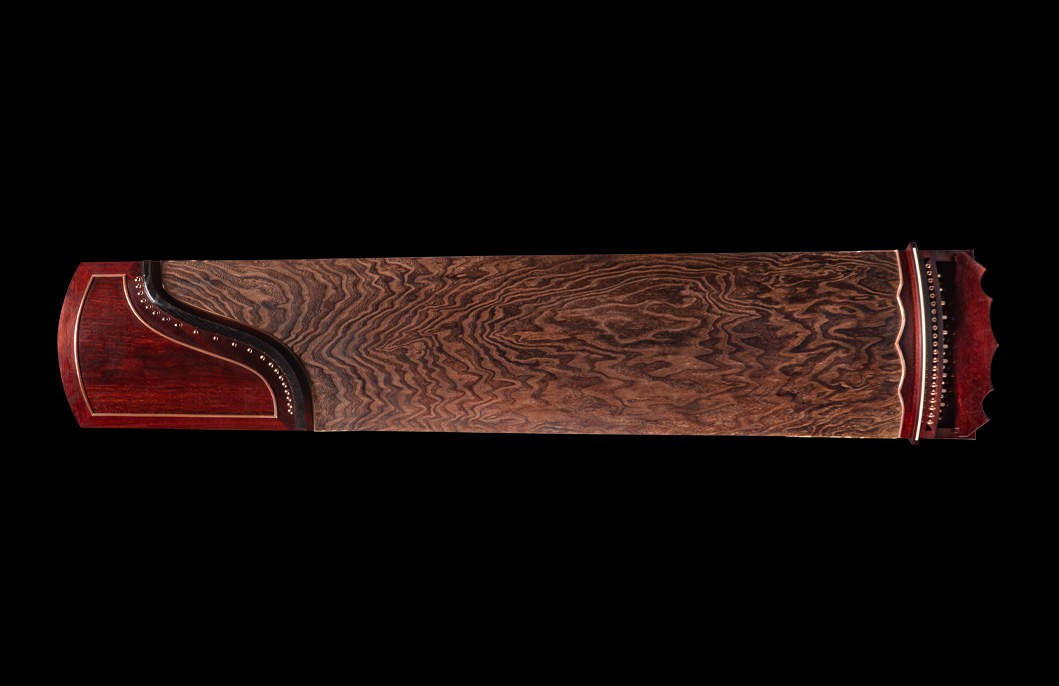
Two iconic styles of tulip wood are adopted: Japanese paulownia wood and American paulownia wood. Japanese Paulownia wood often features unique mountain patterns, with the grain undulating like a mountain range. In contrast, American paulownia wood typically has distinctive horizontal stripes, with a flat grain resembling a straight line, much like ocean waves.
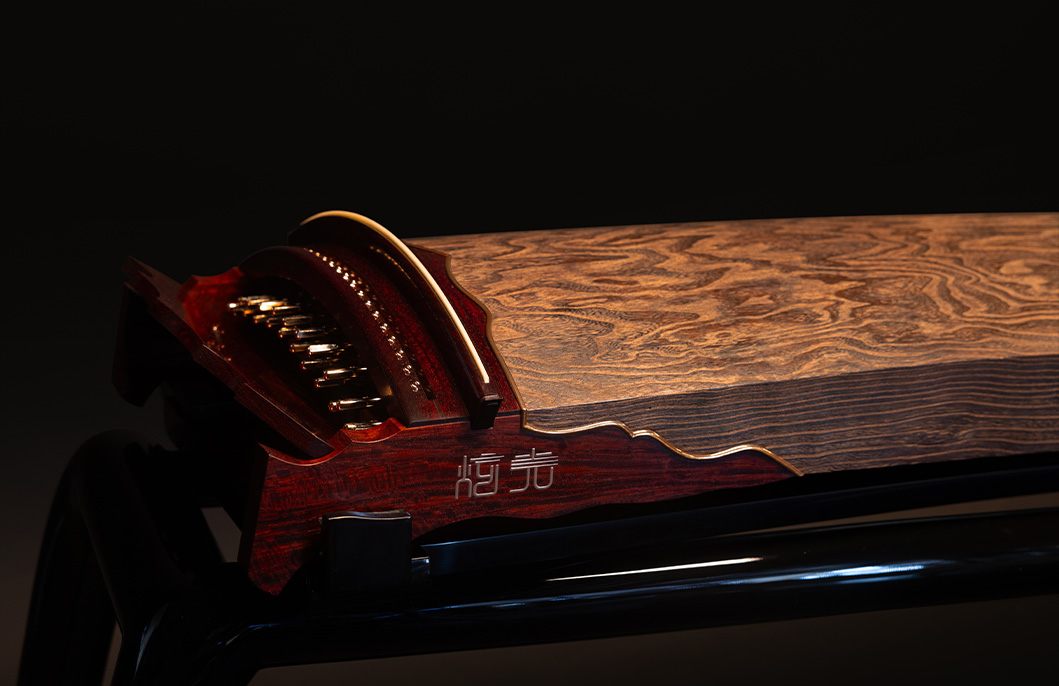
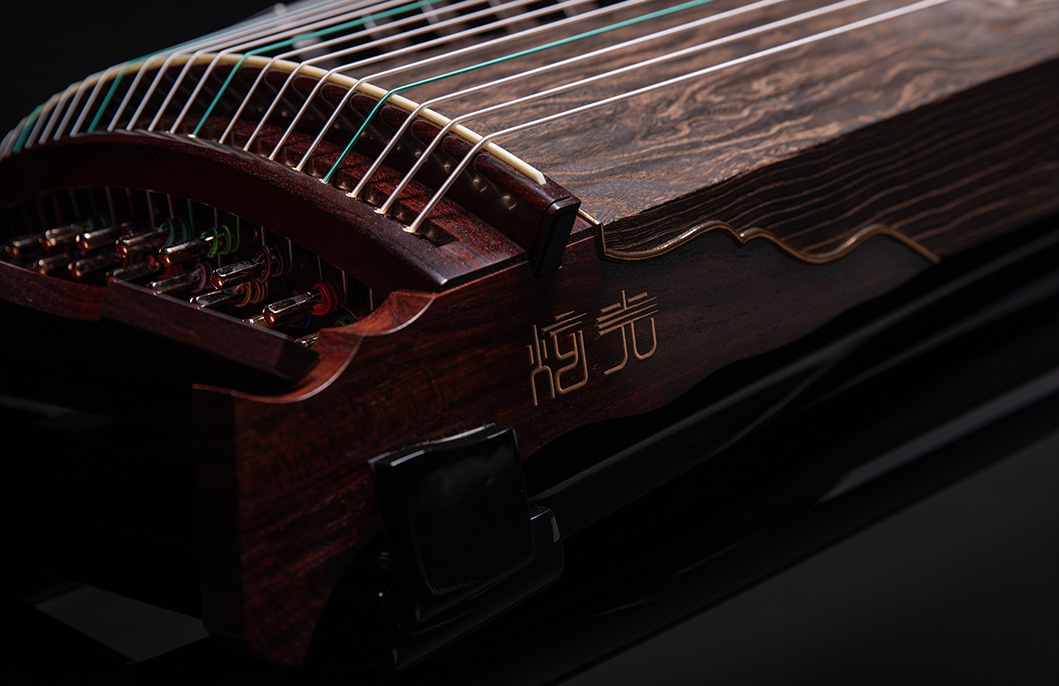
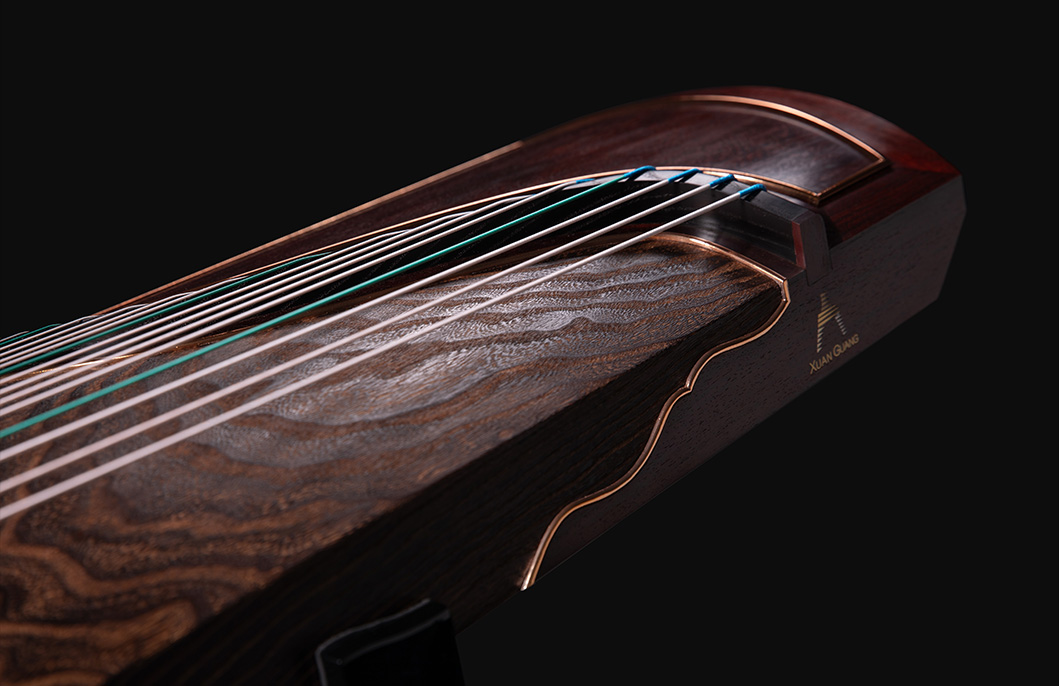
This time, the founder of "Xuan Guang," Mr. Mok Wai Leung, has chosen two rare materials for the body of the guzheng, both of which feature iconic, regionally distinctive patterns. Paired with the precious Indian rosewood, the patterns of the Paulownia wood complement each other beautifully. At the same time, "Yue Shan Le Shui" has incorporated rose gold decorations in its design to create a striking contrast with the rosewood, which changes from deep red to dark purple as it oxidises; the rose gold accents become more pronounced, highlighting the elegant lines of "Yue Shan Le Shui." Additionally, it features a unique patented design of a new soundboard that carves out curves and triangles, significantly enhancing the zither’s feedback, creating a harmonious experience for the player.
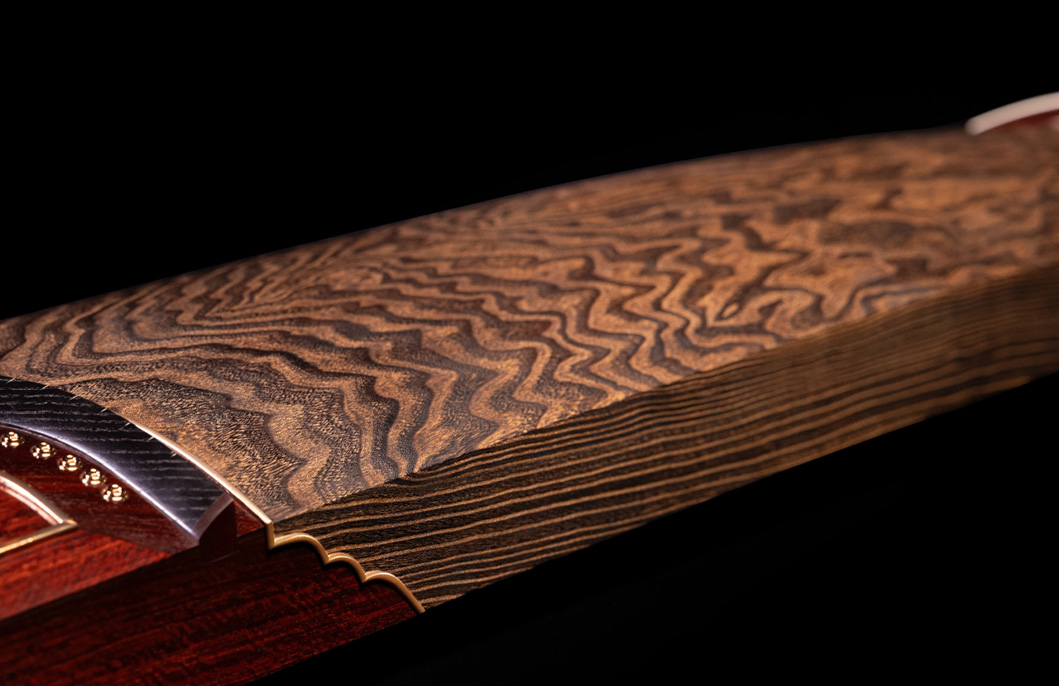
Japanese Paulownia thrives in cold climates and grows at a slower rate than trees in Southeast Asia, resulting in denser growth rings. This makes it ideal for crafting zither instruments, as it produces clear, layered tones that are both simple and rich, providing a unique advantage for every luminous zither.
The wood grain infuses each luminous zither with soul; the annual rings bear witness to the tree's growth, and the patterns become increasingly distinctive with age, bestowing each luminous zither with its own unique life.
"Yue Shan Le Shui" selects nearly seventy-year-old Japanese cold-climate Paulownia for the instrument's body, a rare and precious material that is hard to come by. The wood emanates a natural aura that envelops the body of the zither. The sound quality of a zither crafted from this grade of wood showcases a unique personality and beauty, creating an unparalleled sound wall that allows listeners to connect with the soul of the zither's music.
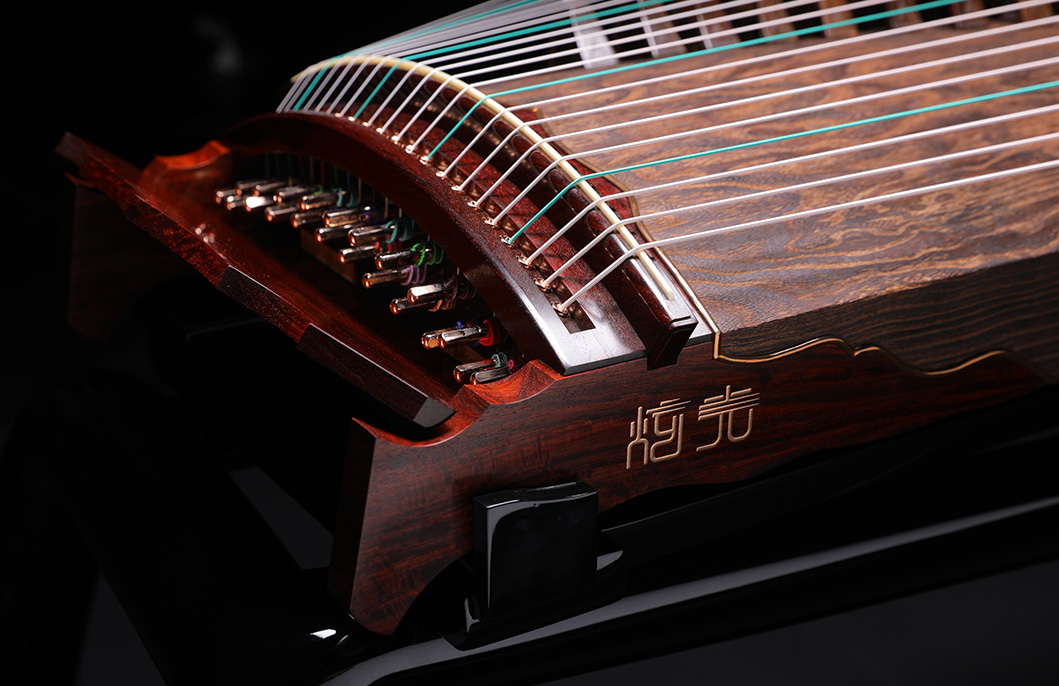
In the pursuit of tonal quality, one must not overlook every single detail. "Yue shan Le Shui" uses Indian Rosewood for the guitar head, not only because of its rarity but also due to its wood properties. Indian Rosewood is a premium variety of rosewood, known for its high density, excellent stability, and top hardness among timbers, making it the ideal choice for a guitar head.
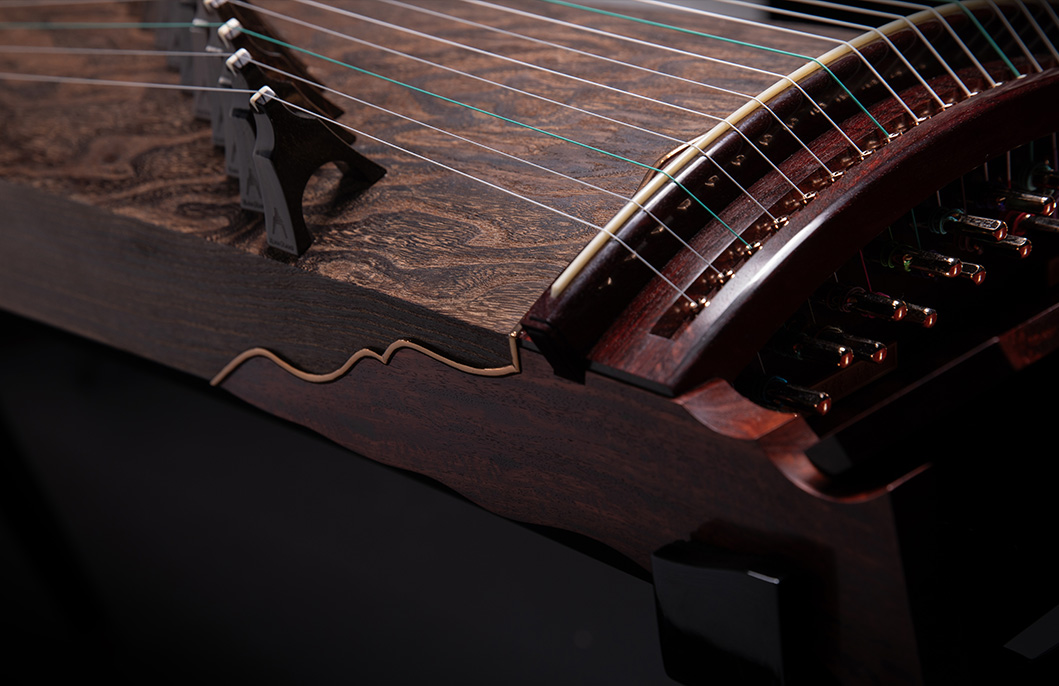
To enhance the quality of the guzheng, it must be improved from the inside out. With the finest materials selected, it should also feature intricate decorative elements. "Yue Shan Le Shui" uses rose gold in a 3D design to outline the shape of the instrument's head, adding a touch of modern style to "Yue Shan Le Shui."
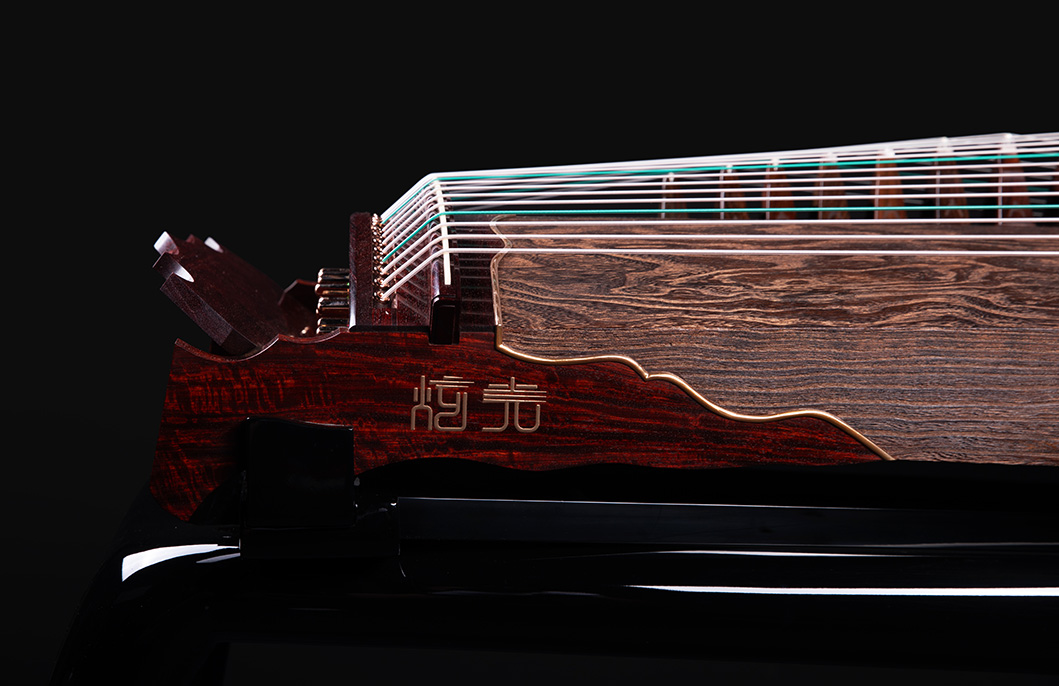
The resonance board is the standout feature of "Yue Shan Le Shui" During the testing process at a koto manufacturing factory in Japan, it was discovered that the box-shaped design of many traditional koto heads actually hindered sound transmission. After extensive testing and refinement, the resonance board was adopted as a replacement, resulting in a clearer and sharper sound.
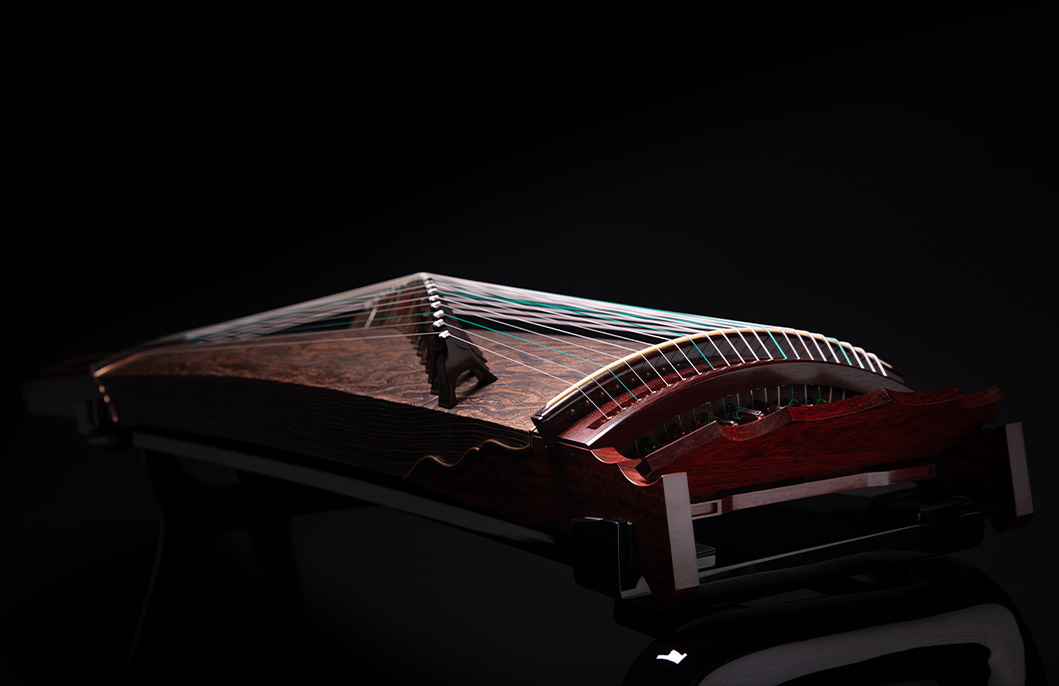
To ensure the stability of the zither's sound, Xuanguang guheng will never compromise on quality for cost-saving. The zither head continues to use original Indian rosewood for inlay, allowing the sound to resonate consistently without distortion from changes in materials.
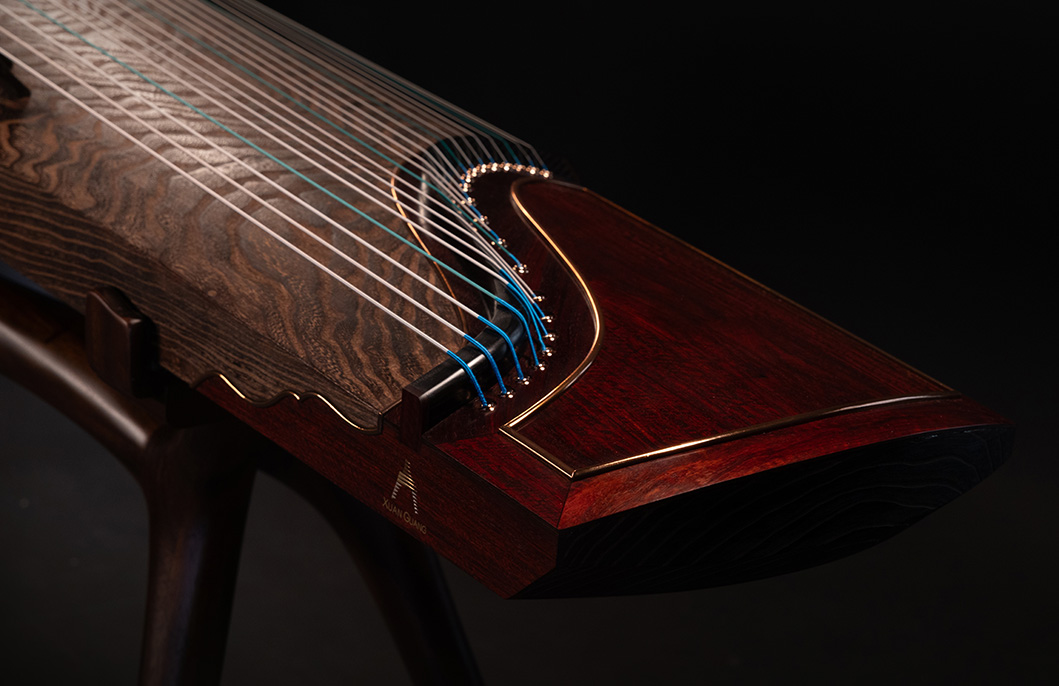
Indian rosewood displays the wood grain's natural texture.
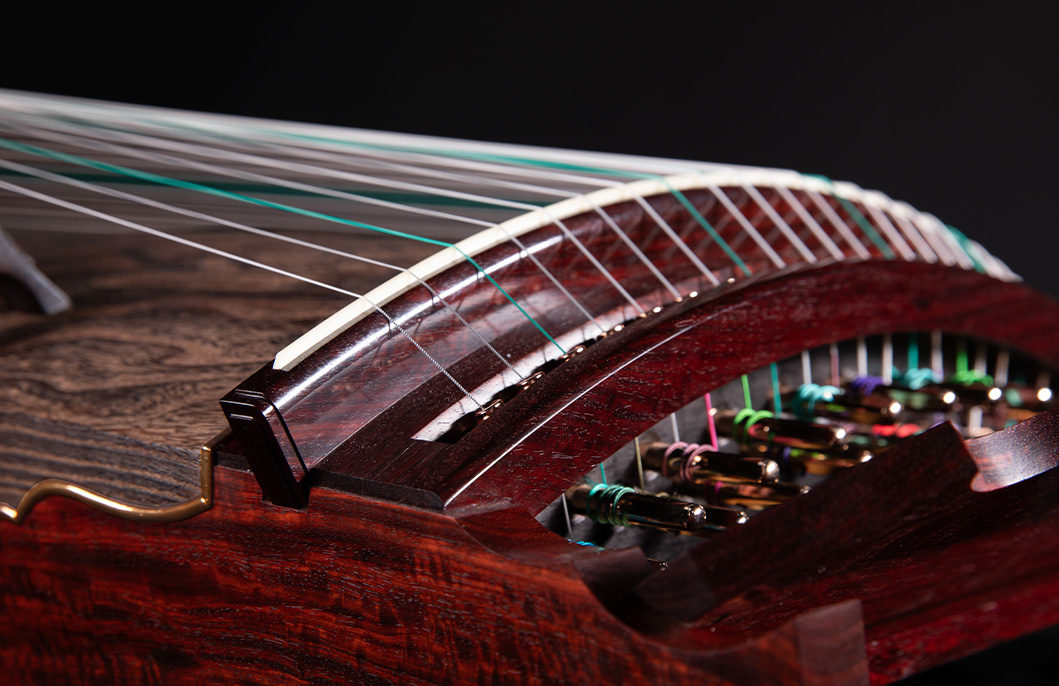
The front bridge is carved out of an integral piece of Indian red sandalwood. Its flawless arc is the result of numerous adjustments by the craftsman such that the tenon fits perfectly on the zheng body to facilitate optimal sound projection.
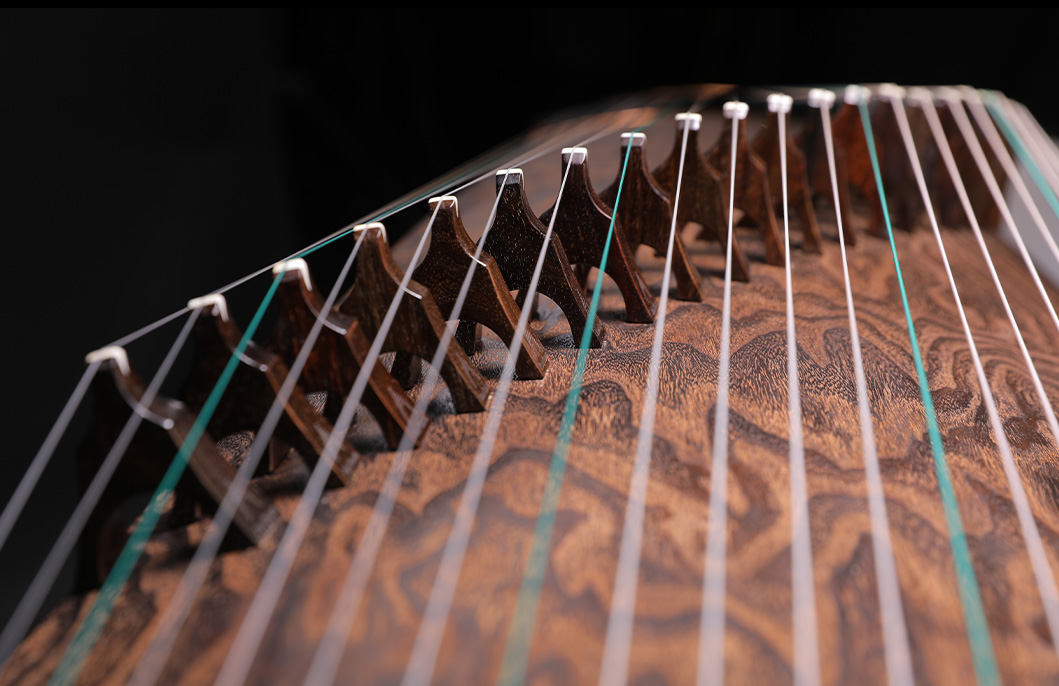
The XuanGuang bridge is made of old material big red acid branch, and the zither maker crafts it by hand according to the body of the instrument. The zither made of old material big red acid branch is carefully crafted by hand, following the wood grain to create each piece, greatly improving the stability and uniformity of the zither, making the sound smooth and progressing layer by layer. The zither of Glowing Pillar is highly durable and does not easily wear out during repeated playing, enhancing the stability of the sound and preventing misalignment while playing. Such meticulous selection and intricate production process mean that the production cost of Glowing Pillar zither is several times higher than that of ordinary zithers, but in order to elevate the sound of the zither, we spare no expense.
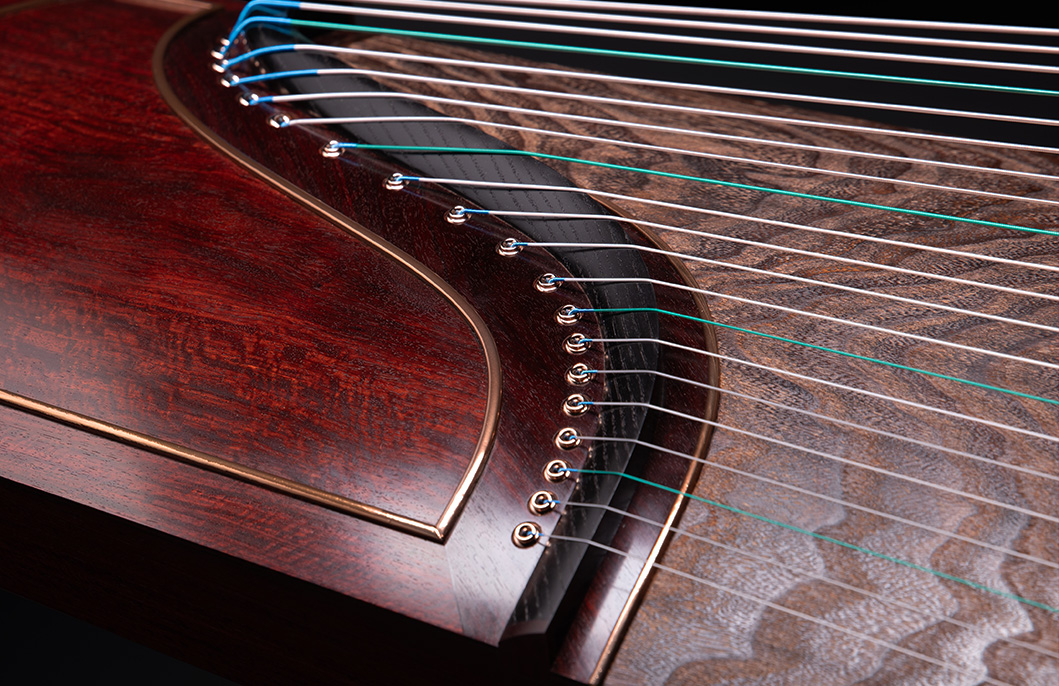
Made of 18K Rose gold, durable and not easily faded.
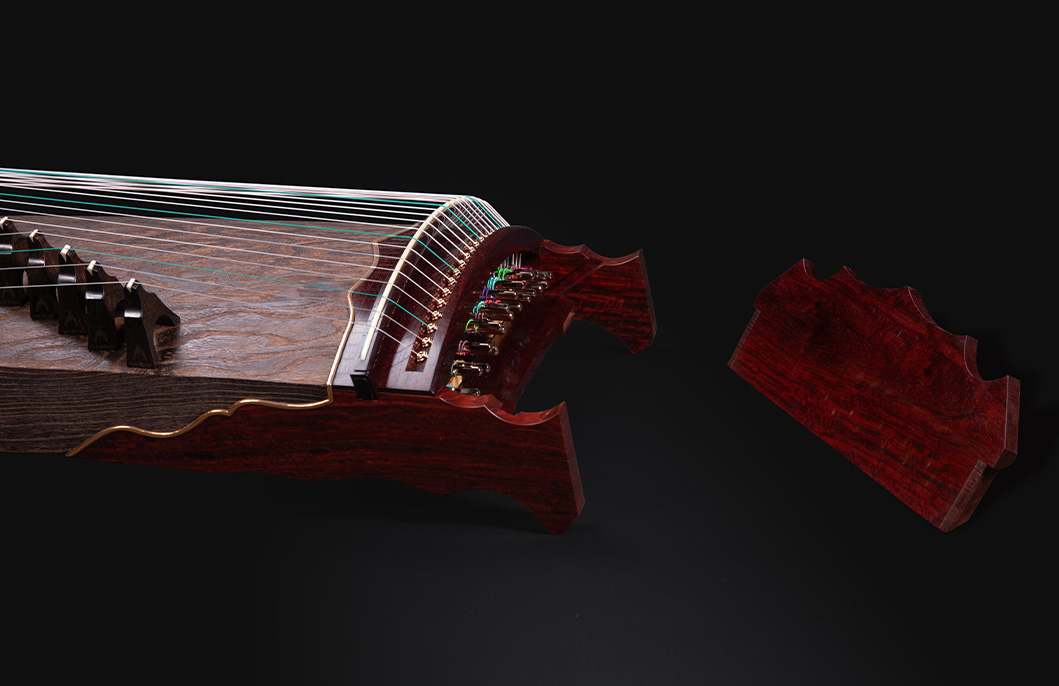
The echo board is a design patent of the Xuan Guang. This unique design can only be found in the Xuan Guang; even if its appearance can be replicated, its essence can never be duplicated. The technical expertise required in the manufacturing process is the essence derived from our joint research with the Japanese manufacturers, and it is the greatest guarantee of ensuring the quality of "Yue Shan Le Shui"
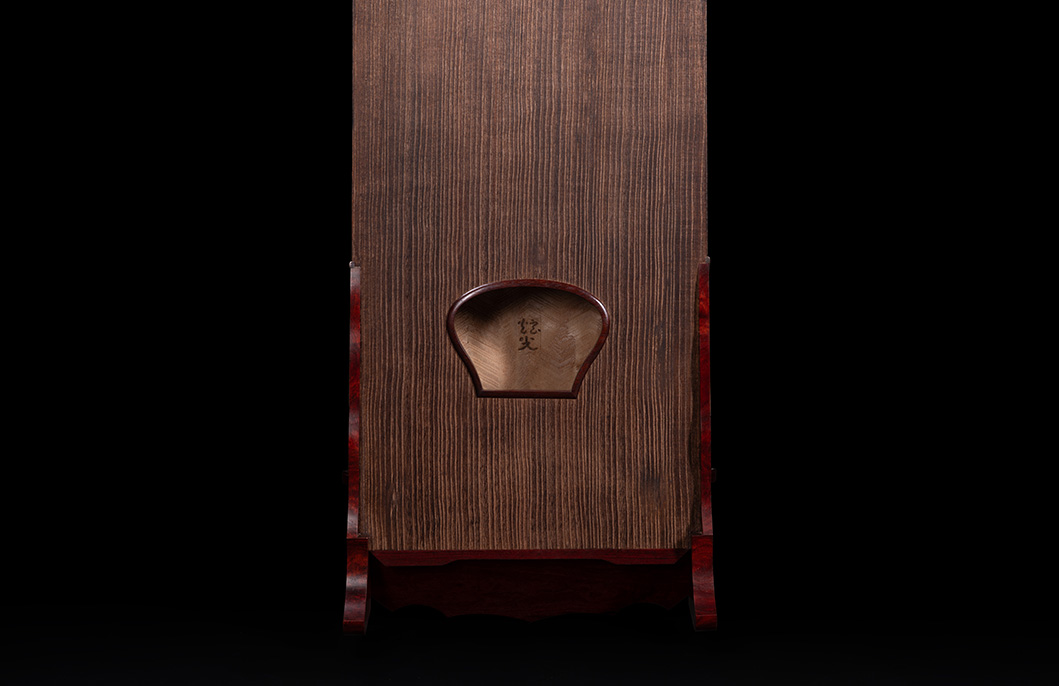
Carving three-layer triangular engraving takes triple as much time than single-layer triangular engraving because of the ultimate precision it demands. Even a tiny mistake could lead to a complete redo of the instrument from scratch. As the interior of the zheng body is a curved surface instead of a flat one, the craftsman needs to take into consideration the contour of the body as well as the way sound is transmitted during playing. Three-layer engraving allows more surface area of the interior to come into contact with the atmosphere, thereby adding depth to the sound layers with aftertones that are more dramatic and compelling.
The sound hole on the backboard panel is also cloaked with red sandalwood to ensure that the sound comes across as solid and well rounded, rather than diffused and scattered.
