

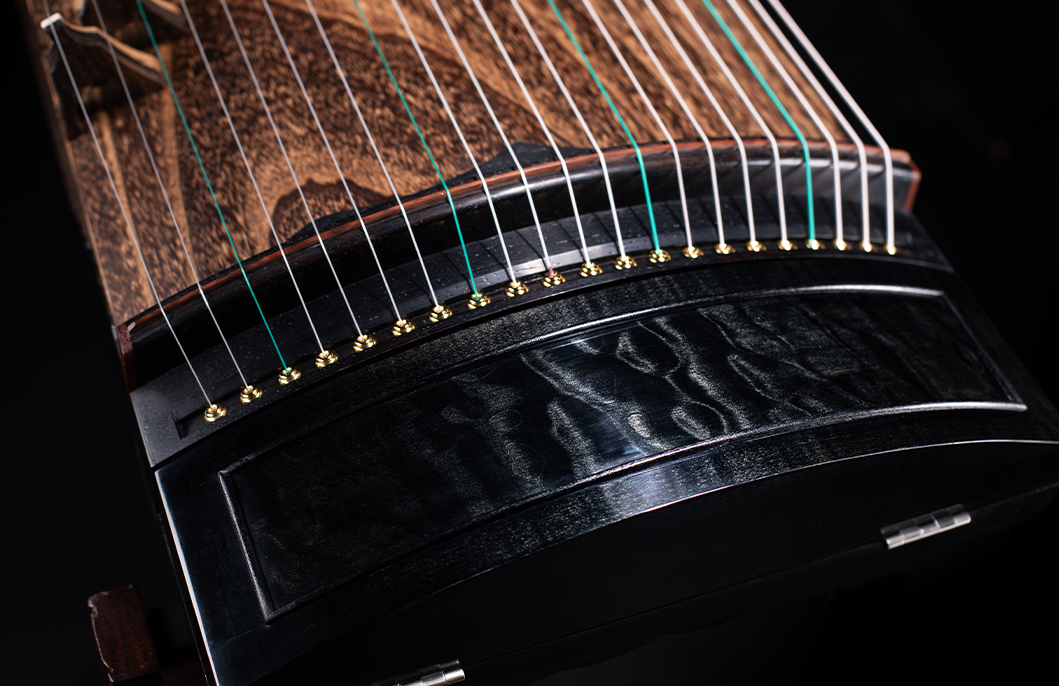
2024 XuanGuang dedicated research with the symbol of brightness, pure glass .Combining the very Eastern charm of ink black With Western modern design concepts Creating a fully black ancient guzheng "Glass light shadow"
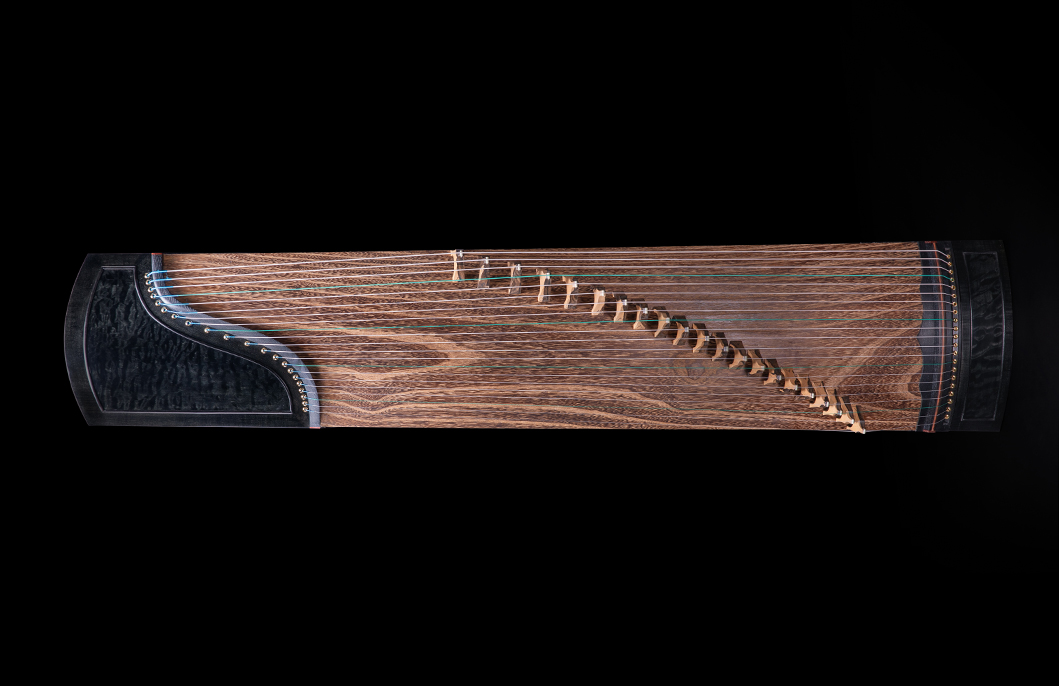
Japanese paulownia grows in cold climates and has a slower growth rate than its Southeast Asian counterparts. As such, Japanese paulownia wood has more compact tree rings which, when used to make guzhengs, consistently results in a beautifully layered, well rounded sound. This is a gift from Nature that each and every Xuan Guang guzheng is blessed with.
Wood grain is yet another feature that breathes life into Xuan Guang. Tree rings are the testimony of a tree’s growth, year after year. They evolve slowly into a pattern that is unique to the tree as it ages, which is why every Xuan Guang guzheng is one-of-a-kind.
The use of 40 year-old Japanese paulownia wood is part of our basic configuration for Xuan Guang. Due to the slow growth rate of Japanese paulownia, it takes at least 40 years for the tree to grow before its wood becomes suitable as material for guzheng production.
Compared to the market norm of using wood of approximately 10 year-old, the tone quality of Xuan Guang is clearly several notches above the rest. The sound produced on 40 year-old paulownia wood has superior penetrating power, with well-defined layers and an all-encompassing presence.
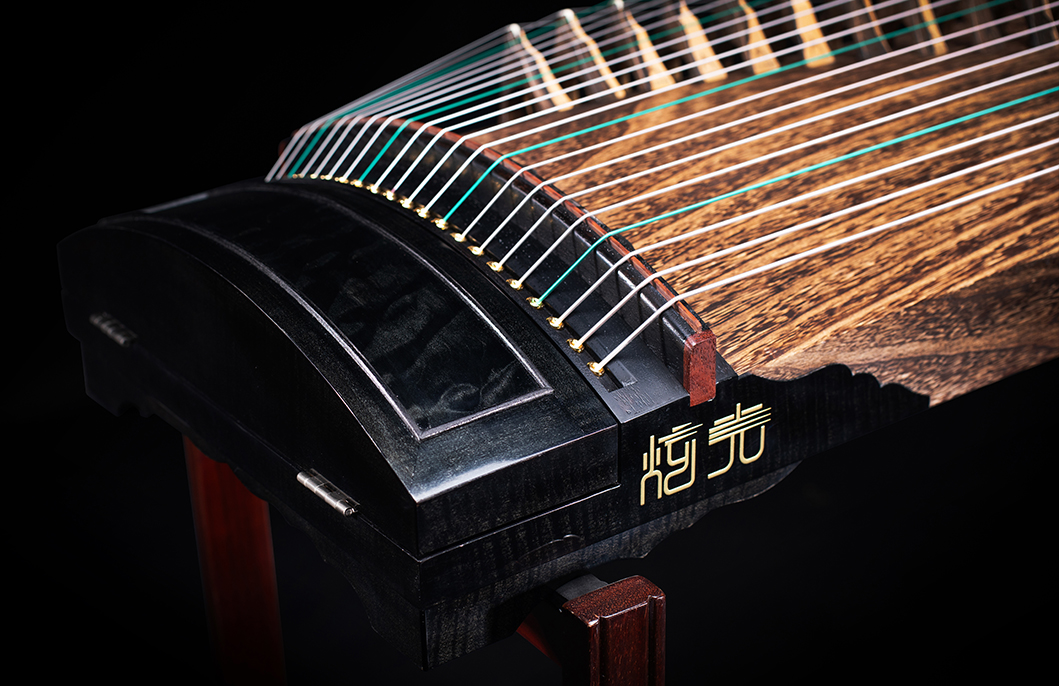
The zheng head is made of Hawaiian acacia wood, also known properly as koa. Koa is often used in the making of top quality guitars, it is also commonly found on ukuleles. The wood grain of koa blossoms like flames, resulting in a gentle, brilliant sound. It works magically with paulownia wood to produce a sound that is both sweet and touching. The surface veneer is made of 3A grade Canadian maple wood which has sophisticated wood grain and an even, compact texture. After being refined and varnished with raw lacquer, its sheer beauty stands out as even more distinguished.
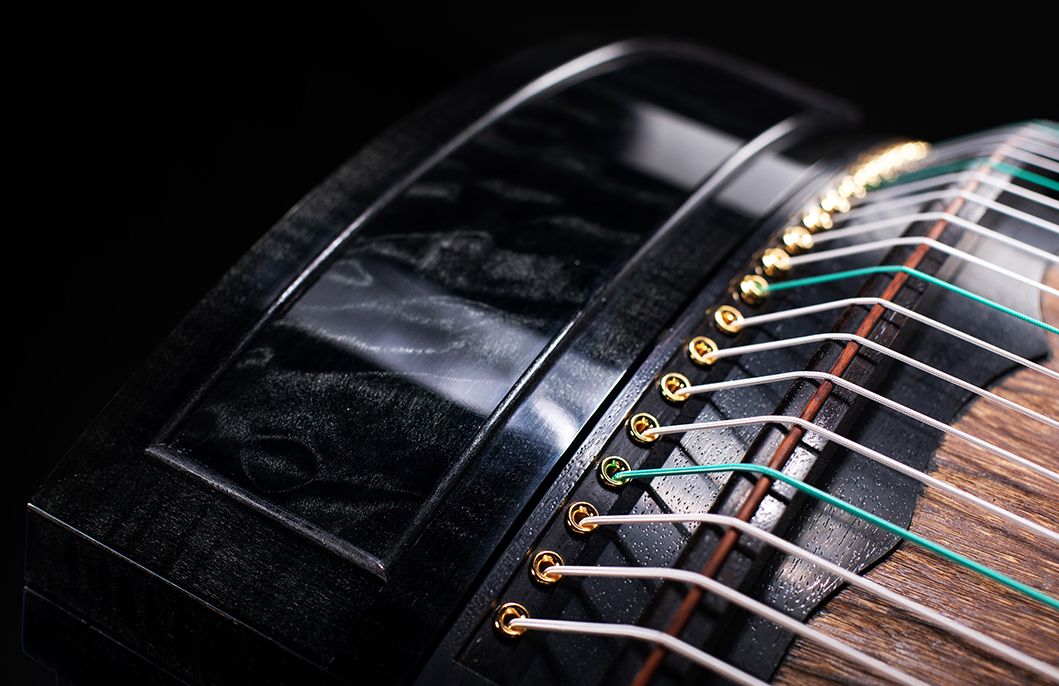
When light and shadow overlap, light takes on a shape that is dazzling. The first ink piano in black and white has become a camera that captures moments in time.
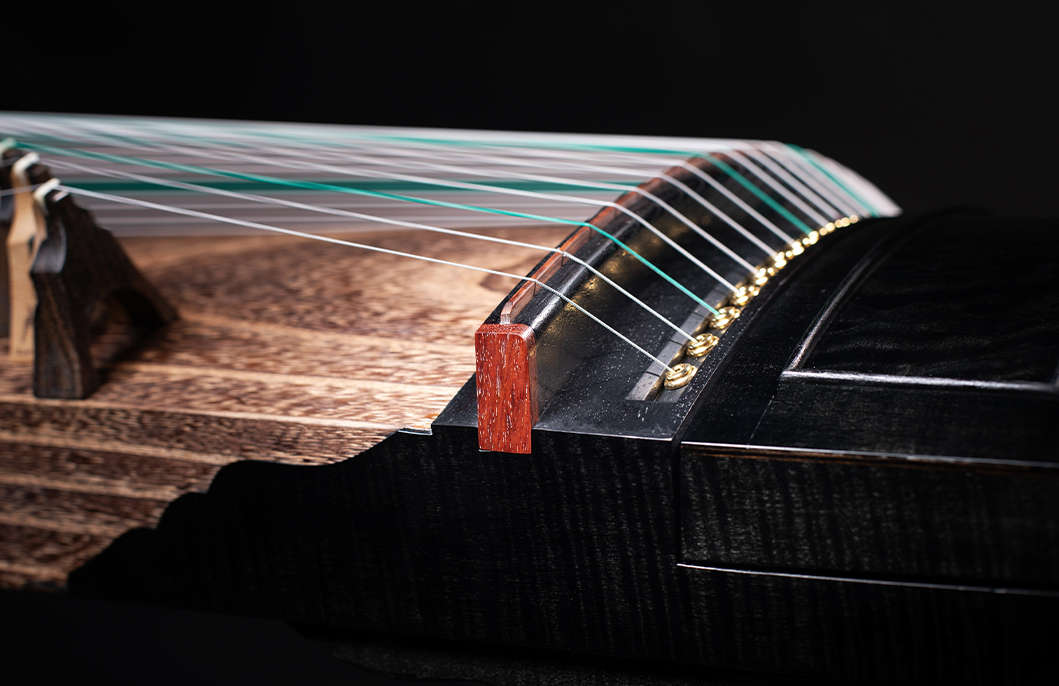
The front bridge is carved out of an integral piece of Indian red sandalwood. Its flawless arc is the result of numerous adjustments by the craftsman such that the tenon fits perfectly on the zheng body to facilitate optimal sound projection.
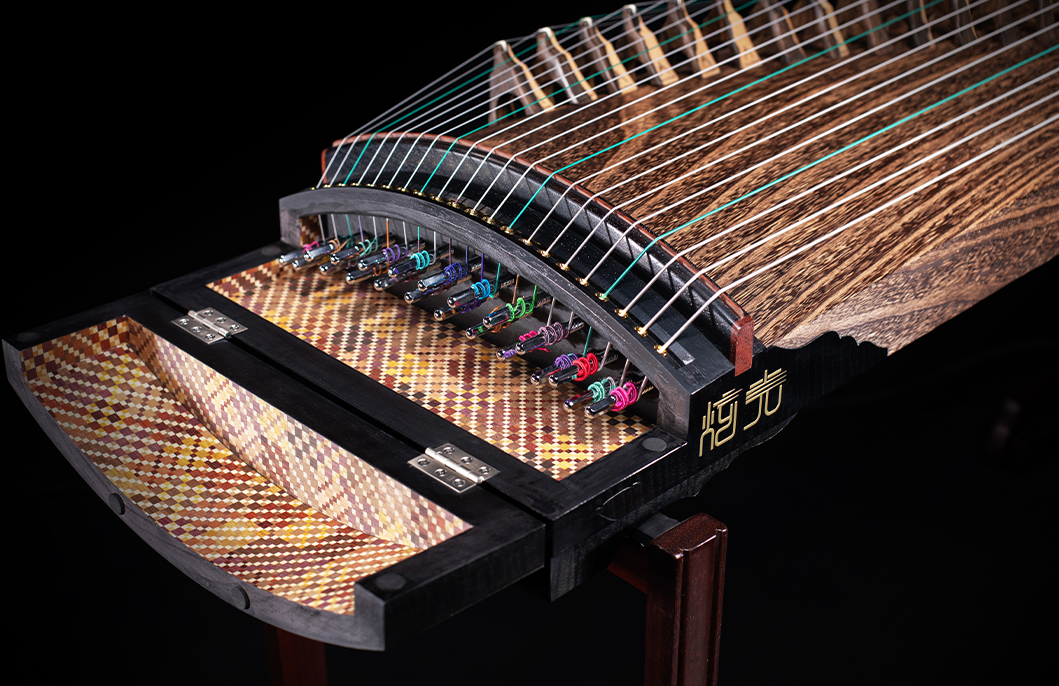
The zheng head interior features the art of yosegi-zaiku, a type of traditional marquetry originated in Hakone, Japan. Natural timbers of different colors and textures are cut into thin plates of wood, and then inlaid into the inner surface of the zheng head to create mosaics of geometrical design patterns. Yosegi-zaiku gained popularity in Hakone during the culturally rich Edo era, and has been designated as the official traditional Japanese woodcraft by the authorities since 1984. Regrettably, there are only a handful of yosegi-zaiku masters nowadays, which has led to artpieces of the craft becoming ever more precious.
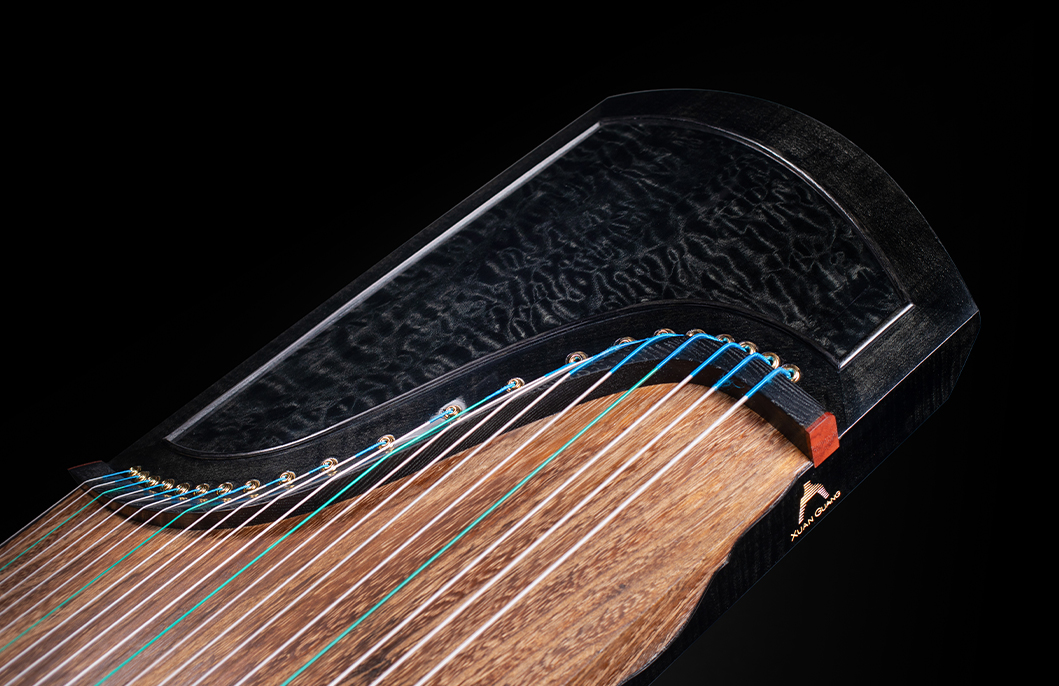
Canadian maple tree is a true wonder of nature. In the realm of music it is more commonly used in the making of drums, guitars and violins. When used in combination with koa, the outcome is an amazing harmony that gives both the sound and look of the instrument a distinctive character.
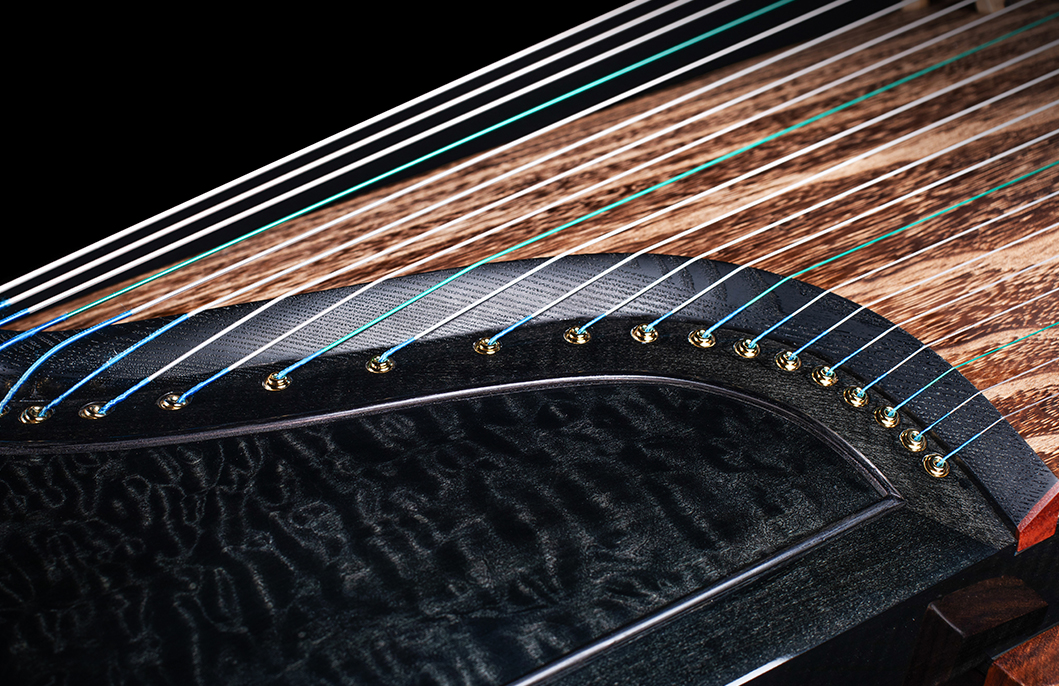
The string holes are cast in 18K gold, which is durable and does not fade easily.
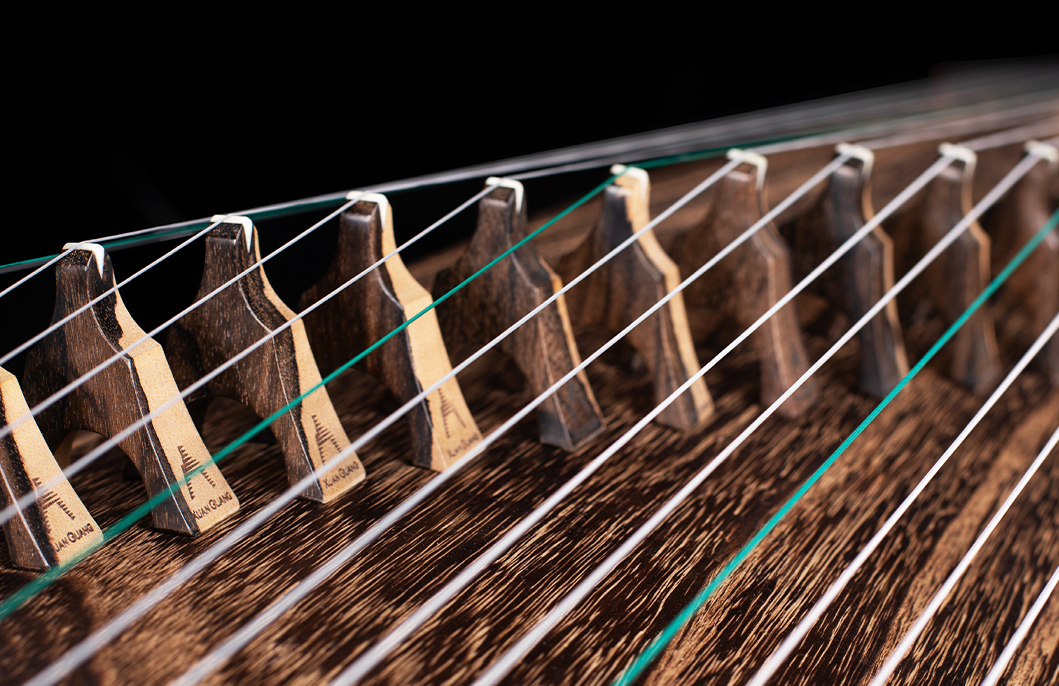
Using specially selected rosewood as the raw material, meticulously handcrafted. Each luminous pillar is custom-made by experienced craftsmen according to the density and curvature of each part of the body.
Luminous pillars also choose to use ox bone as the intersection with the strings, not only high durability, but also avoid easy erosion during repeated playing, and strengthen the stability of the zither sound, so that there will be no code skipping during playing.
Such meticulous selection of materials and complex production processes mean that the production cost of the luminous pillar is several times higher than that of ordinary zithers, but in order to elevate the zither sound, we spare no effort and expense.
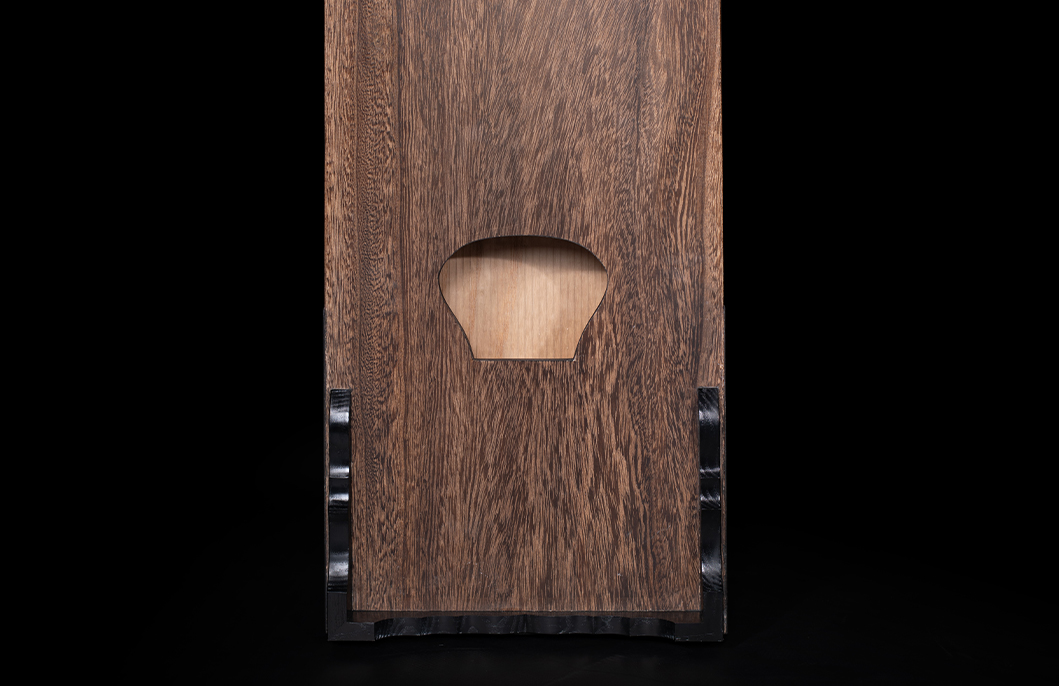
The straight-line engraving inside Xuan Guang’s zheng body have been tested and finetuned by our craftsmen over and over again. It is more compact, more refined compared to ordinary straight-line engaving on the market, adding a layer of depth to the sound of the instrument.
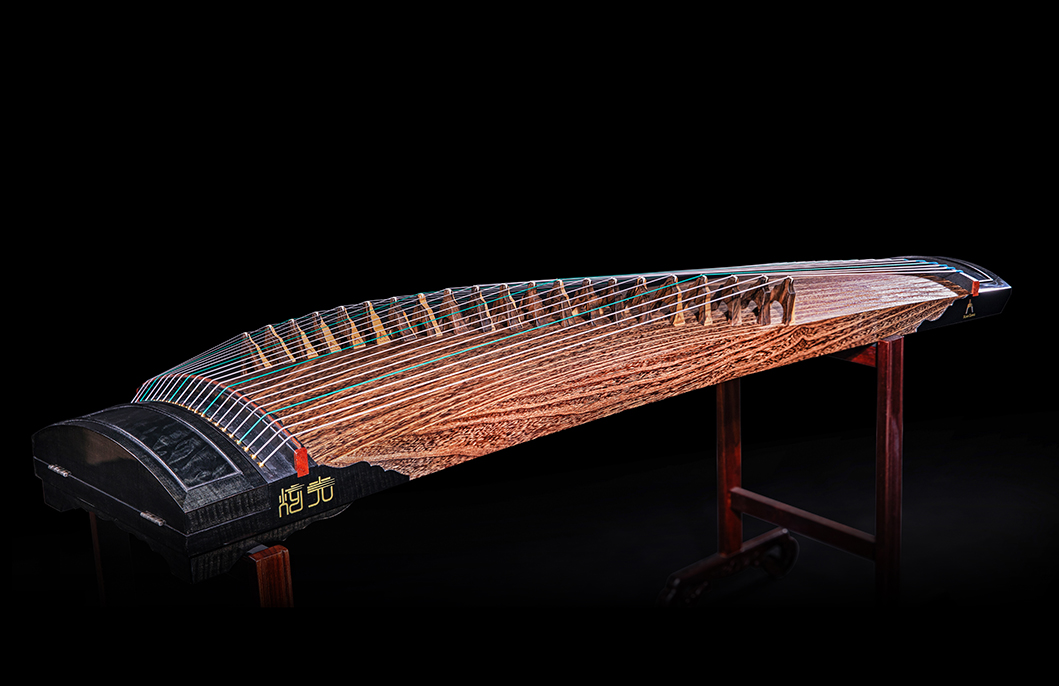
Using sound to allow you to feel the pure and bright atmosphere of glass, From the selection of raw materials to the craftsmanship, All embody the confidence of brilliance.
From this moment on, for you, Not just a musical instrument, It is also a reflection of your transparent "Zheng heart."
