


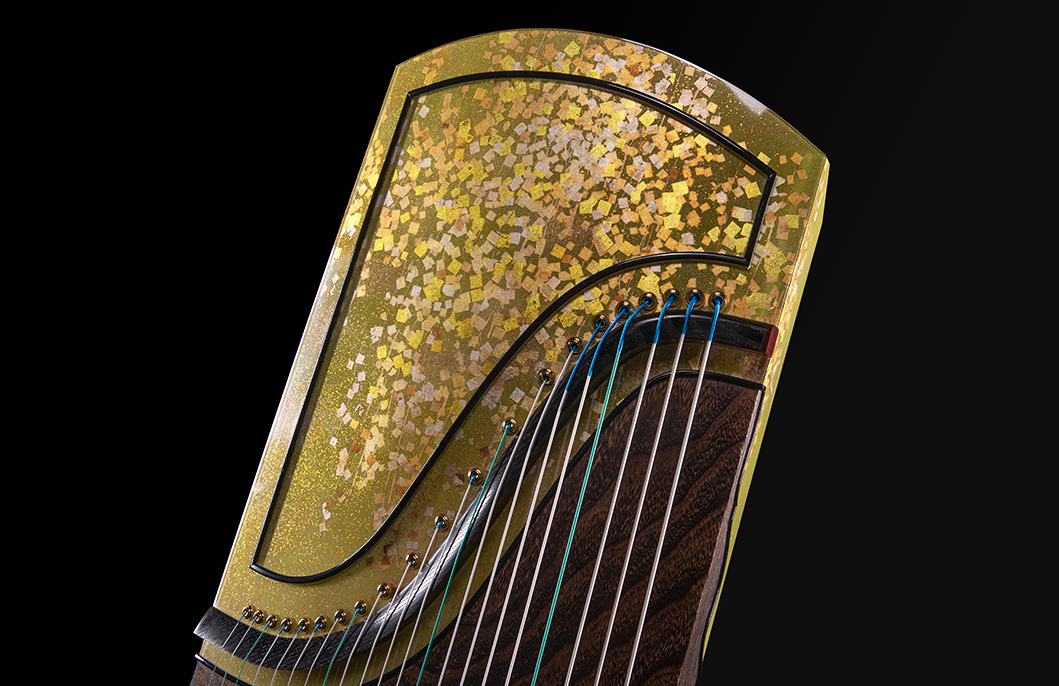
The gentle rain in the heavenly street is like fine cream, the grass appears green from afar but is bare up close. This is the best part of spring, surpassing the misty willows that fill the imperial capital. "Early Spring Presented to the Water Department's Zhang, Eighteen" by Han Yu.
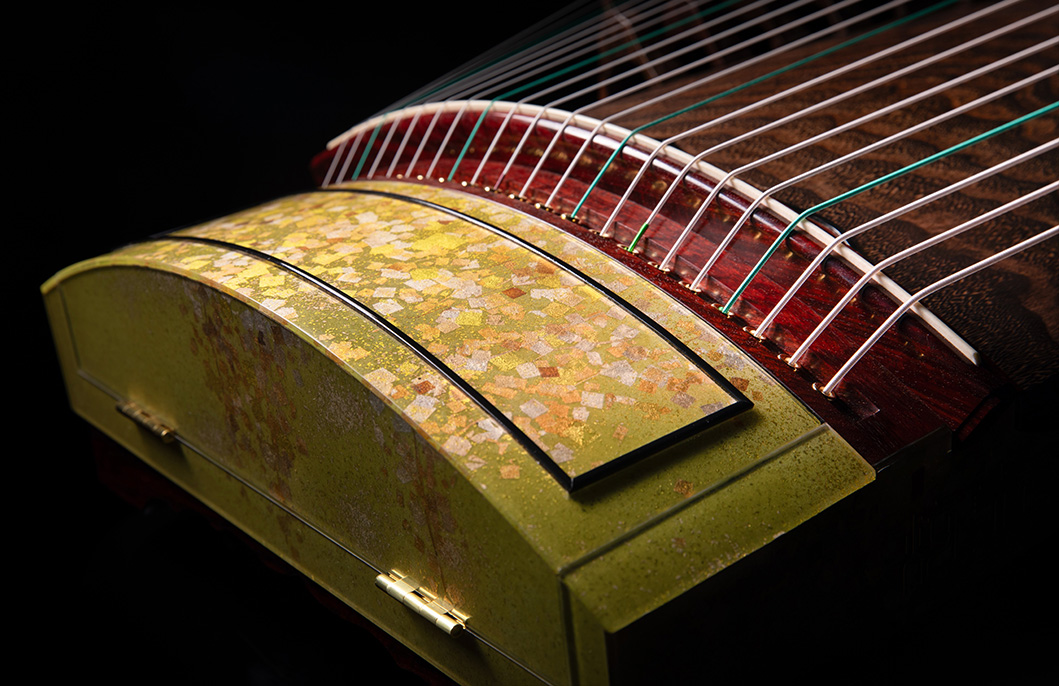
The Contemporary Art Series made its debut in 2019, featuring small pots and paper dyed with various colours, complemented by gold powder techniques and splatter painting to create abstract patterns—truly meticulously crafted contemporary artworks.
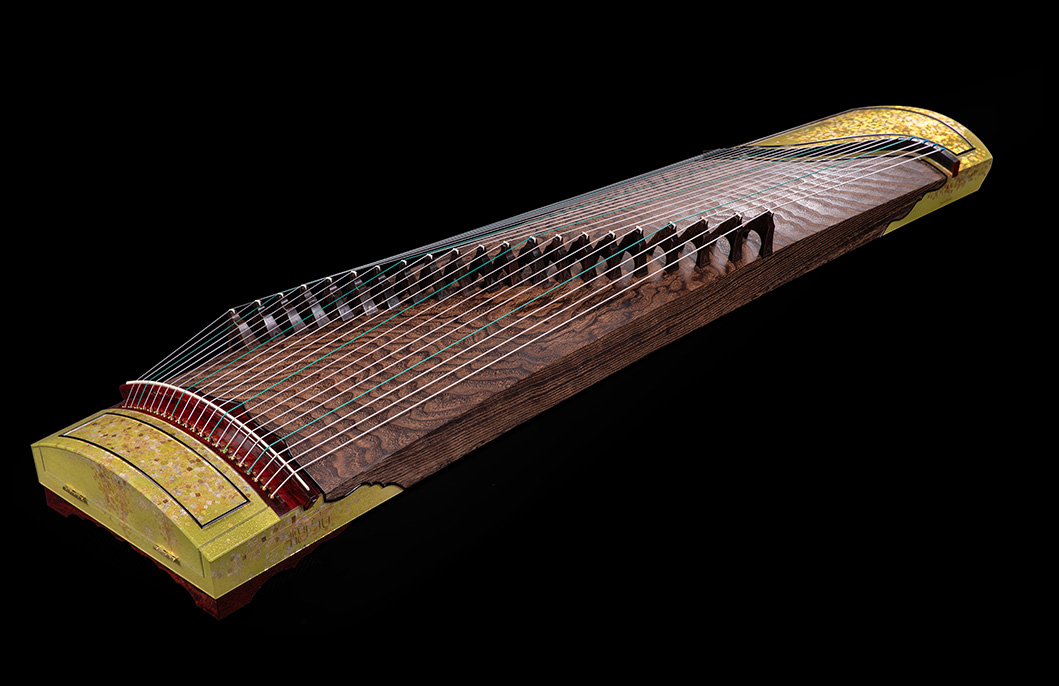
Mr. Mok Wai Leung, founder of "Xuan Guang," has pioneered a new design in guzhengs, introducing the new collectible Contemporary Art Series guzheng "As Graceful As a Fairy." In addition to selecting materials based on the artwork, the design also draws from the patterns of paulownia wood, the decoration of the headstock, and the internal structure and base of the guzheng to create a "new type of guzheng baseboard."
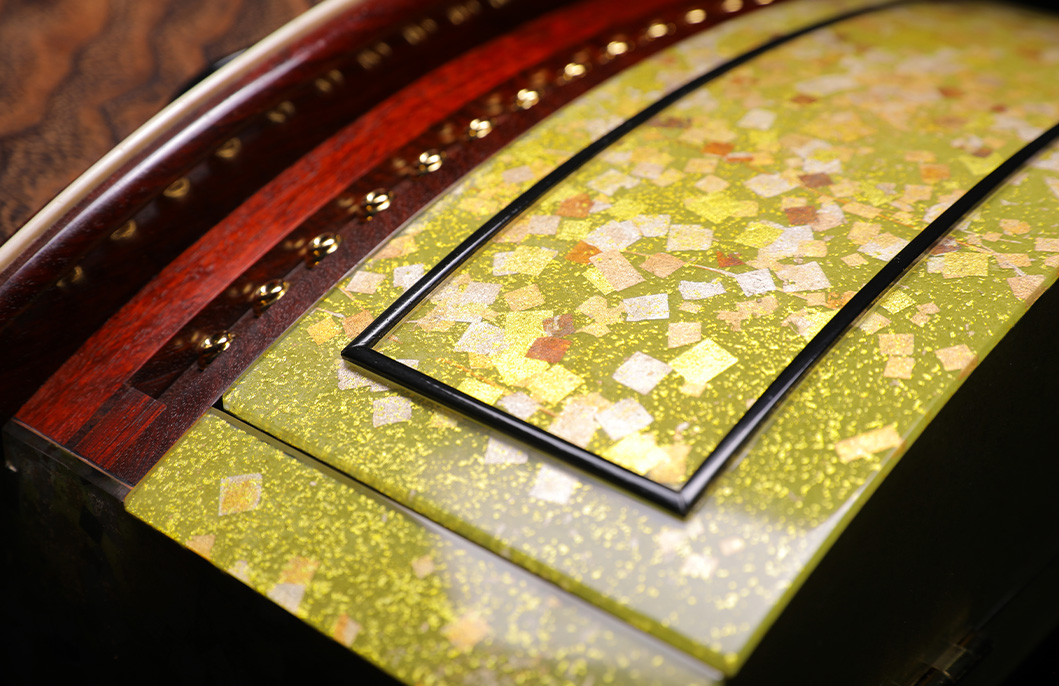
The character "若" carries meanings of freshness, tenderness, and new beginnings, symbolising concepts such as life, hope, and rebirth. It is often used to describe the green hues of plants.
Wakakusa refers to the tender grass that has just sprouted from the spring soil, presenting a vivid yellow-green colour. The colour of Wakakusa is a traditional hue that emerged during the Heian period, associated with its delicate colour imagery. It represents the revival of all living things and people's yearning and pursuit of a beautiful life.
Young grass is often used to metaphorically represent young women, embodying an image of elegance and depth. The term "young grass" captures the feeling of youth and softness.
In the spring season, young grass also has different names, such as "grass young leaves," "spring leaves," and "young leaves." The tender green of young grass represents the initial joy of spring. As it breaks through the soil and grows, young grass changes colour rapidly under the constant sunlight, making the duration of its young grass hue extremely fleeting. It feels almost ethereal and illusory, as if one moment of inattention could cause the young grass colour to begin to transform.
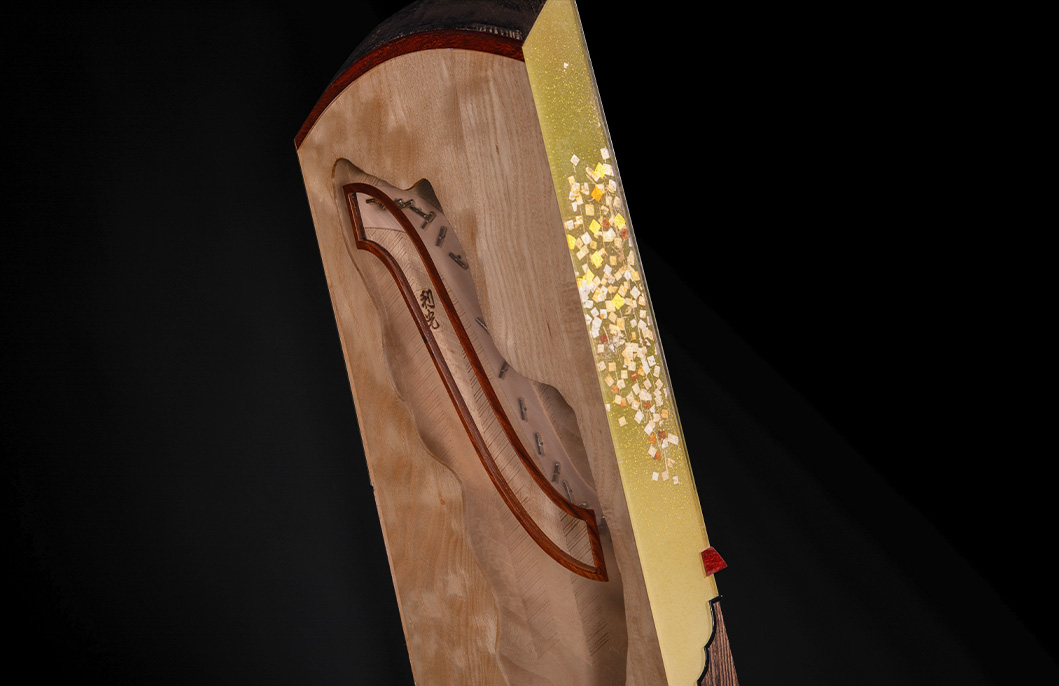
Through the innovative application of fiberglass technology and materials, combined with the artwork of small bottles and paper, "As Graceful As a Fairy" presents different impressions and effects from various angles and lighting.
With the sophisticated design of structural engineering and the clever use of the translucent base, "As Graceful As a Fairy" not only highlights the essence of the Shimmering Light brand but also fully demonstrates the brand's fusion of traditional and new material applications and craftsmanship. It expresses a high pursuit of the integration of exquisite art and aesthetics.
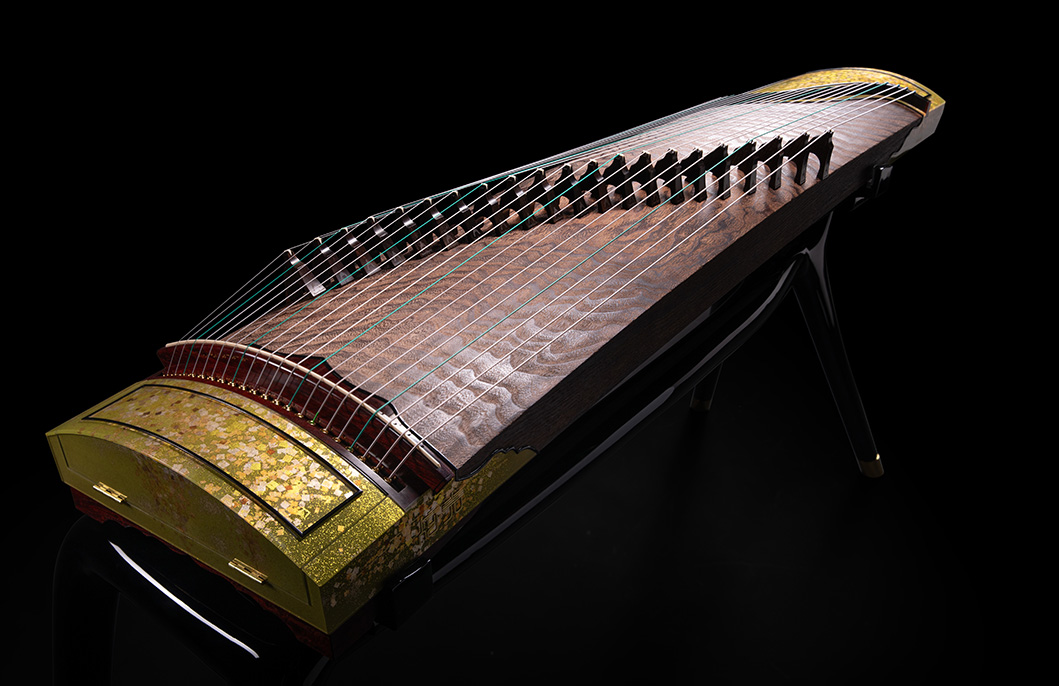
The term "飄然 As Graceful " often conveys a sense of floating or drifting lightly, evoking feelings of relaxation and freedom. "若仙 As a Fairy " expresses a realm or state akin to that of an immortal, emphasising a person's extraordinary nature and uniqueness.
The melodious sound of "飄然若仙 As Graceful As a Fairy" is enchanting and resembles celestial music. When the guzheng's strings resonate, it sounds like a gentle spring, akin to a chorus of birds singing, providing a sense of tranquility and freshness. The purity and elegance of this sound seem to transport one into a fairyland.
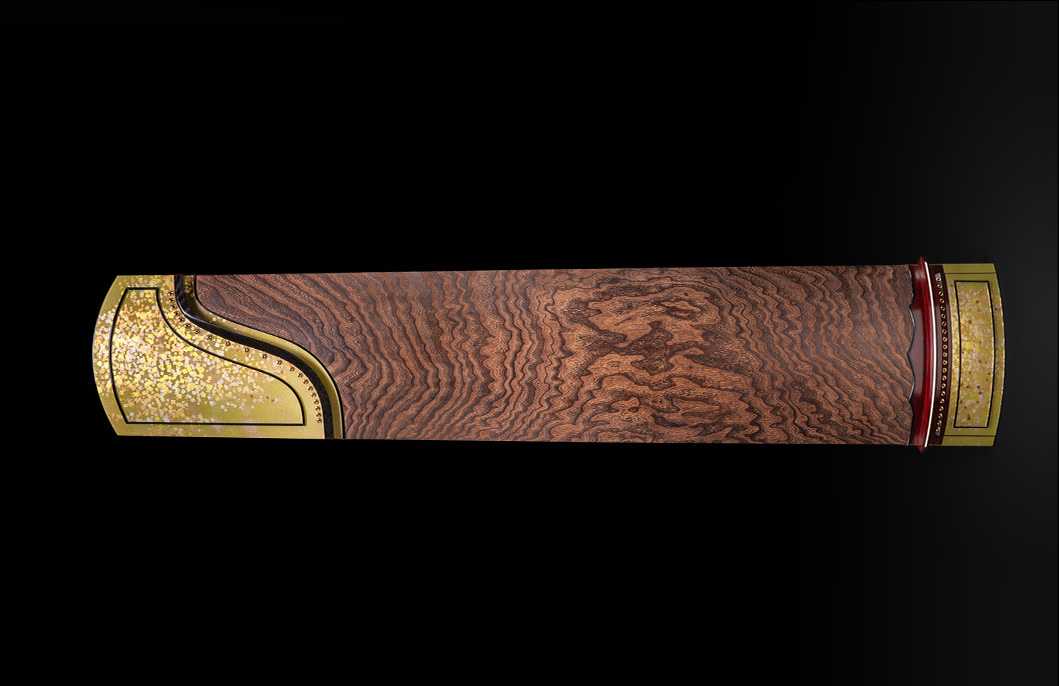
This guzheng features precious Japanese paulownia wood with an age close to seventy years, showcasing exquisite wood grain. Japanese paulownia thrives in temperate zones, growing more slowly than trees in Southeast Asia, resulting in tighter growth rings. When used for crafting guzhengs, it produces distinct tonal layers that are simple yet rich, providing each dazzling guzheng with a unique advantage.
The wood grain of the paulownia infuses each dazzling guzheng with soul, as the growth rings bear witness to the tree's growth over the years. The unique texture evolves with the tree's age, giving every dazzling guzheng a one-of-a-kind life.
Using Japanese temperate-zone paulownia wood aged sixty years for the body of the instrument is an exceedingly rare and valuable configuration, a treasure that is hard to come by. The natural energy radiating from the wood envelops the instrument. The quality and beauty exhibited by this grade of dazzling guzheng construct an unparalleled sound wall, guiding listeners to connect with the soulful tones of the guzheng.
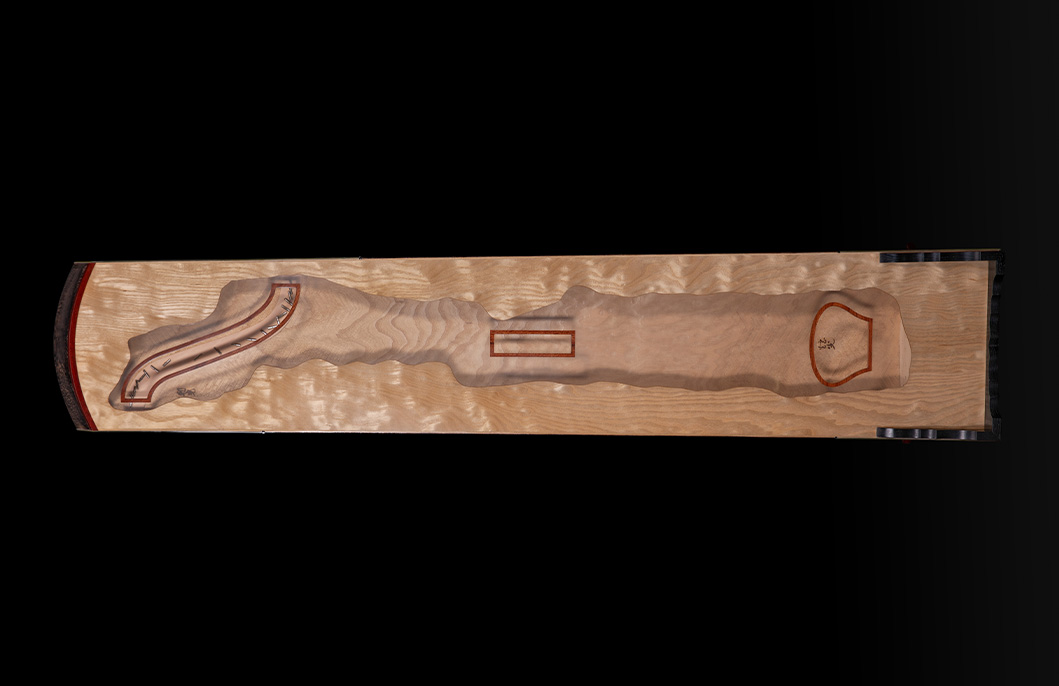
To provide guzheng collectors with a deeper appreciation of this craft, XuanGuang has launched a design that cleverly blends paulownia wood and fiberglass, resulting in a "new-type guzheng baseboard." This craftsmanship intricately combines practical functionality with aesthetic design, showcasing XuanGuang commitment to innovation in modern guzheng art while preserving tradition. It also reflects XuanGuang's relentless pursuit of design, sound, and performance.
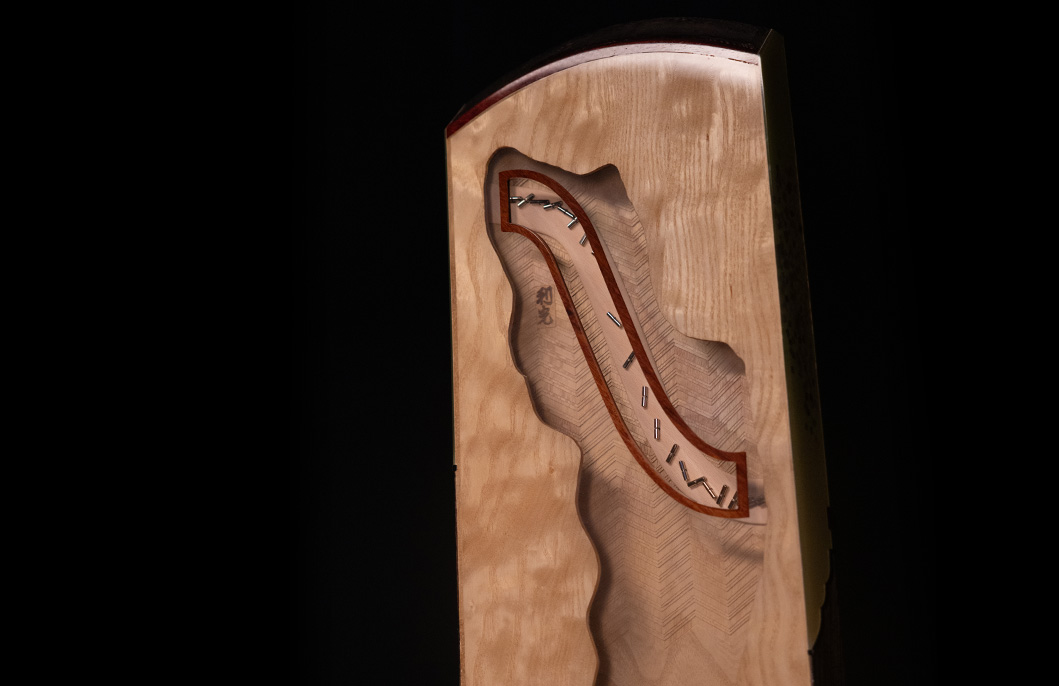
Through the unique patented "Deep Pressure Fibreglass Technology" on the guzheng, the base significantly enhances the volume of its resonance box function. This groundbreaking structural design achieves a perfect balance between performance, functionality, and aesthetics, showcasing the internal beauty of the guzheng's body. The see-through base design is truly striking. The high-end guzheng instrument presents an innovative structure inspired by creativity.
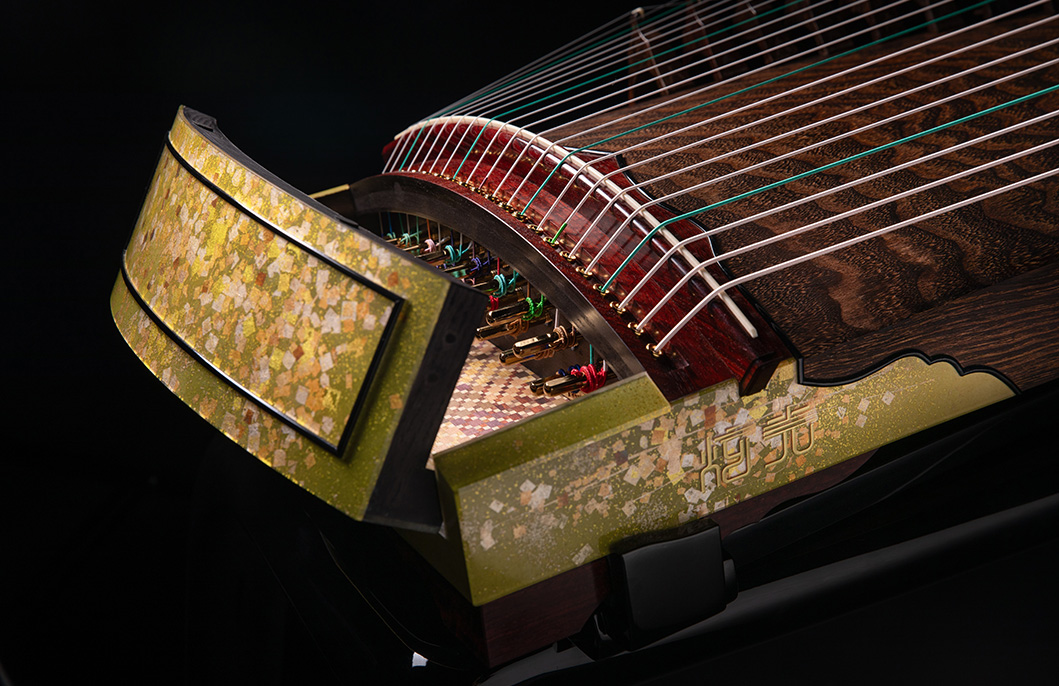
The patented zither head design effectively enhances the resonance of the instrument while reducing the vibration damping of the guzheng. This further improves the tone and performance of the guzheng.
Patent Number: 201930467464.7
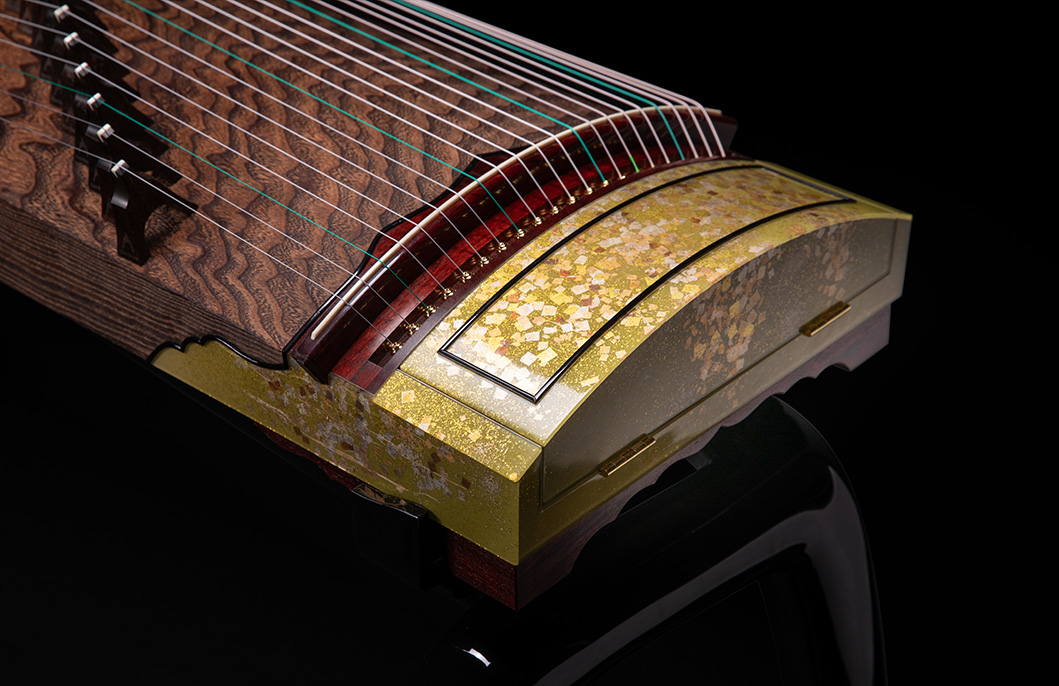
The entire piano head is combined with Japanese Otaru washi paper. Through the application of innovative fiberglass technology and materials, along with artwork made from Otaru washi paper, "Floating like a Fairy" presents different impressions and effects from various angles and lighting.
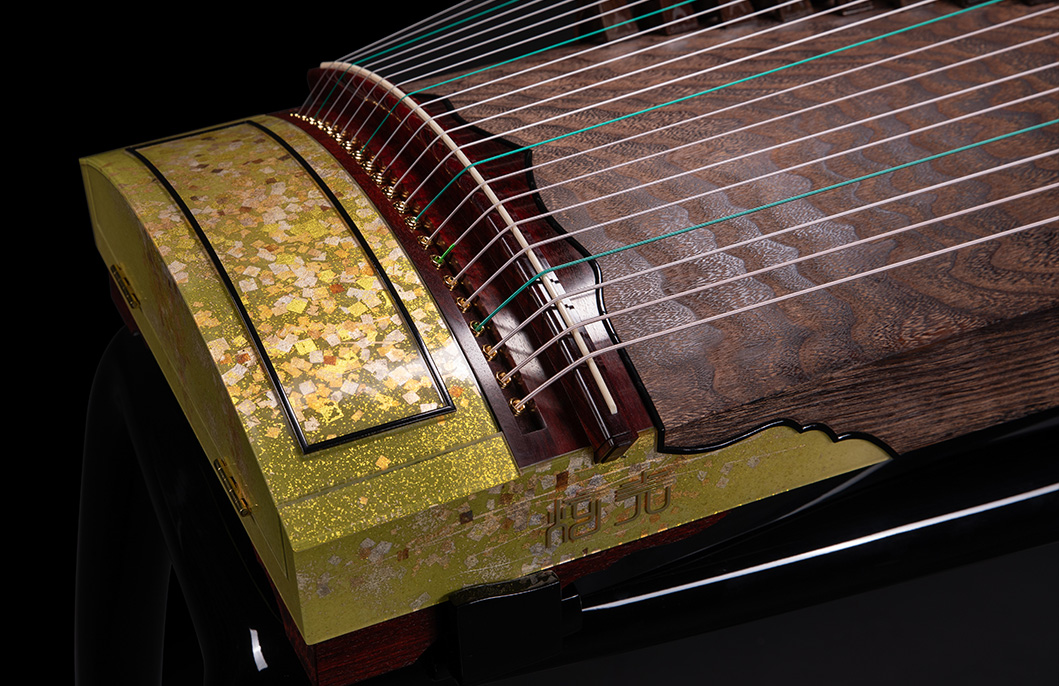
The Mountain is made of whole Indian red sandalwood, and craftsmen carefully adjust its curvature to fit into the mortise and tenon joint. The unique inclination design effectively enhances sound conduction and resonance, further elevating the sound quality of the guzheng.
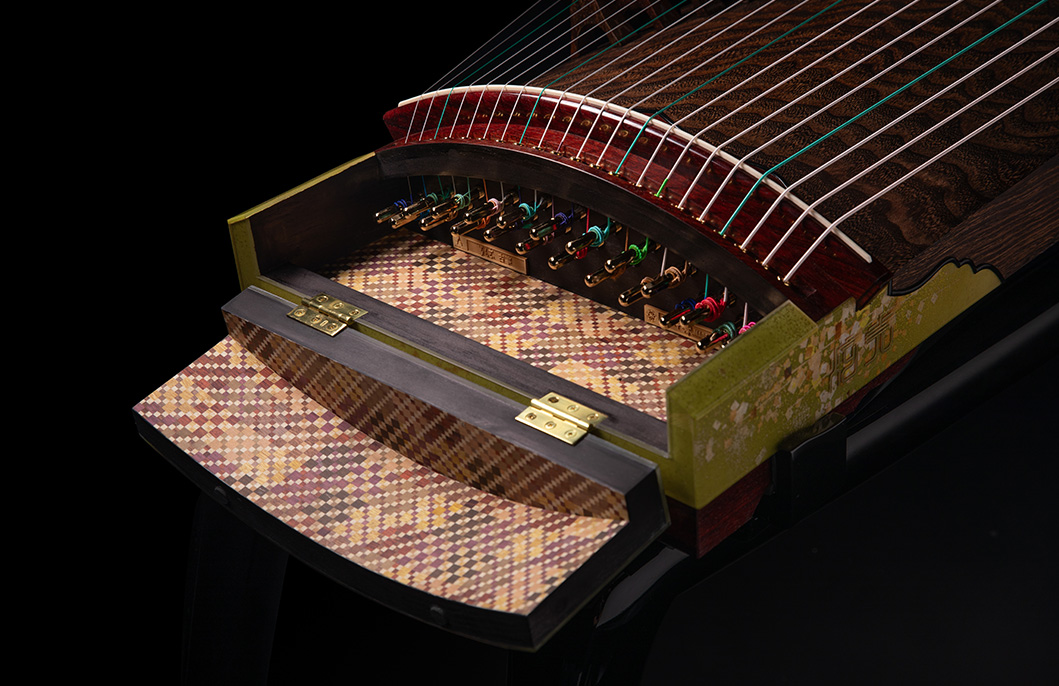
The interior of the plectrum box features traditional Japanese marquetry from Hakone, using all-natural wood to create geometric patterns. The wood is then cut into "seed boards" and inlaid into the box of the plectrum. Marquetry has been passed down in the Hakone region since the Edo period, and in 1984, it was officially recognised as a designated traditional Japanese woodworking craft. Unfortunately, the number of artisans skilled in this technique has dwindled, making each piece that employs marquetry increasingly rare and valuable.
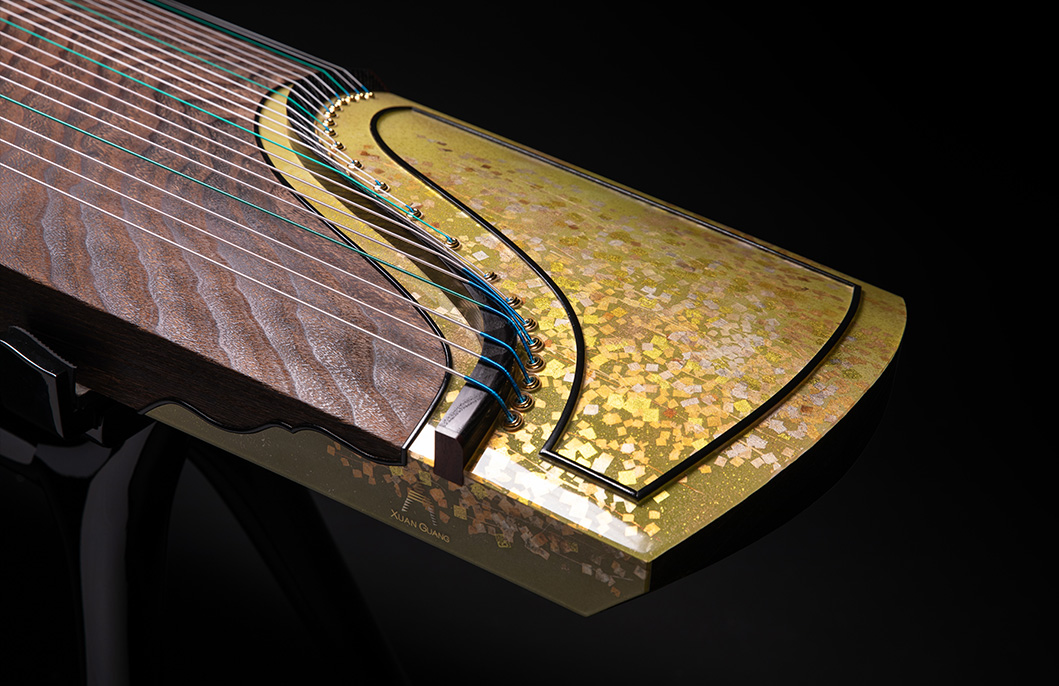
Through the application of new fiberglass technology and materials, combined with paintings on small bottles and paper.
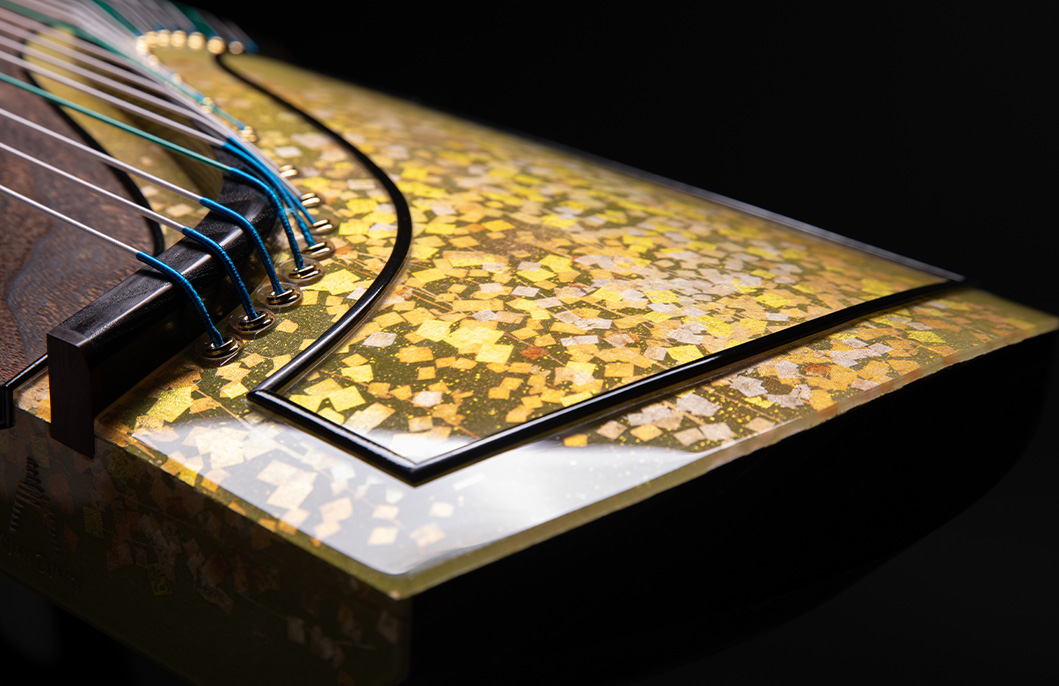
Washi fibres are long and, although thin, are durable with a wonderful texture. However, due to their low production, they are extremely precious, leading UNESCO to designate "Japanese handmade washi techniques" as an intangible cultural heritage in 2014. Washi is strong and soft, capable of lasting for many years, accompanying the vibrant tradition of kite making for centuries.
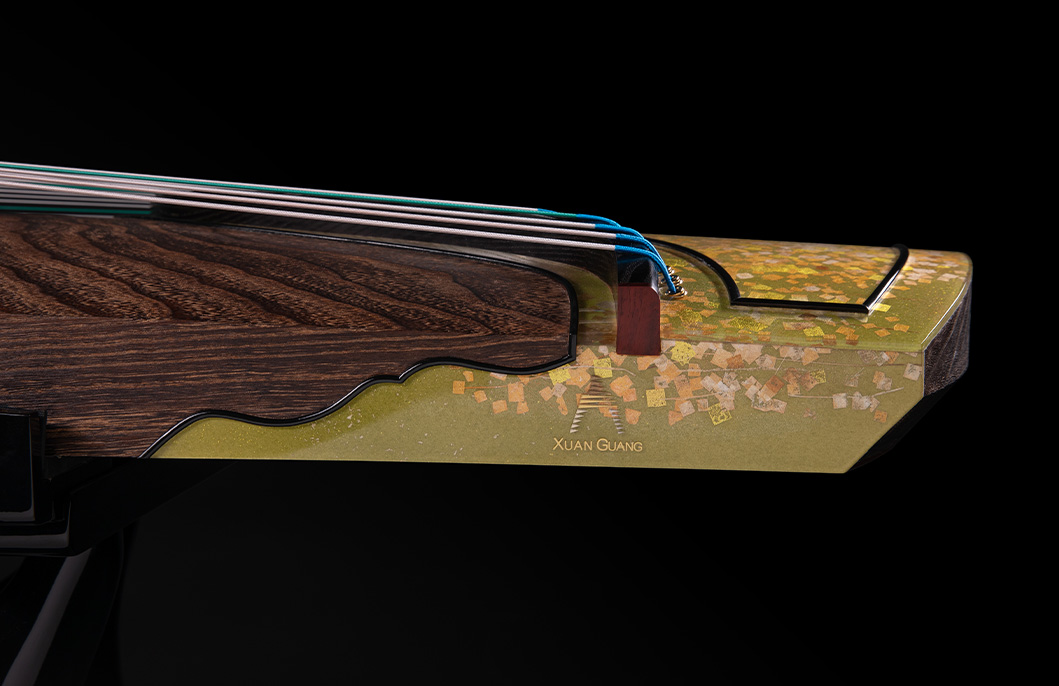
The 3D mortise and tenon joints enhance the dimensionality of the zither body, creating a unique appearance. However, the entire manufacturing process is quite meticulous. During production, it requires extensive hand polishing to achieve a smooth and bright finish, and the joints must fit perfectly without gaps to ensure optimal sound transmission. The pinnacle of this craftsmanship lies in the pursuit of beauty in form and spirit while striving for an imperceptible finish. This is one of the hallmarks of the Shining Zheng, making its aesthetic qualities difficult to replicate.
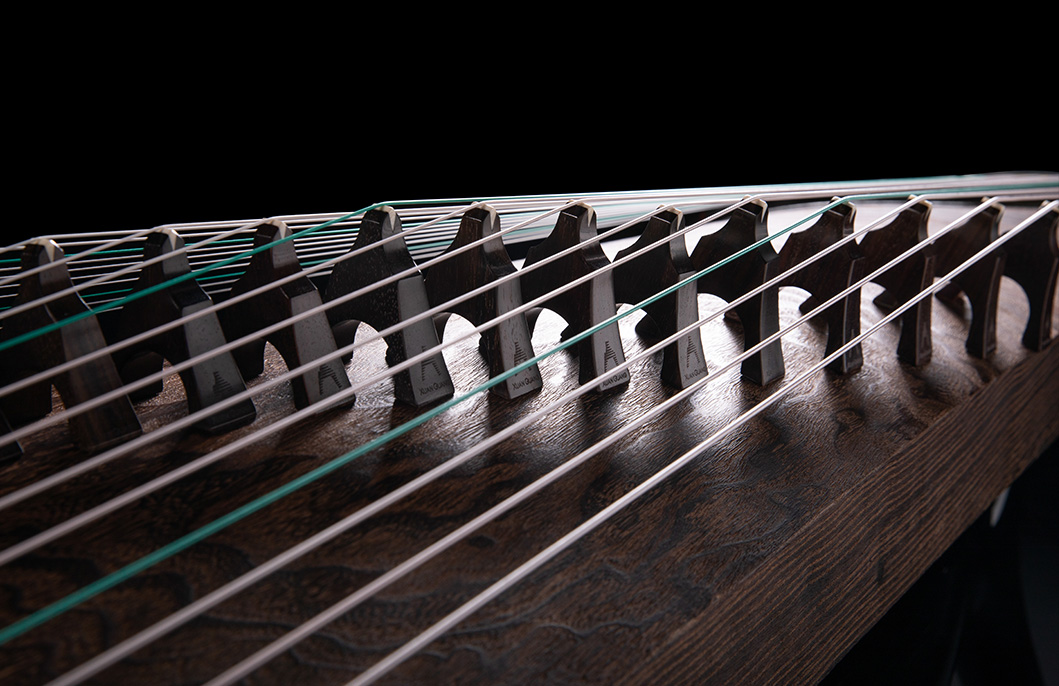
The XuanGuang bridge is made of old material big red acid branch, and the zither maker crafts it by hand according to the body of the instrument. The zither made of old material big red acid branch is carefully crafted by hand, following the wood grain to create each piece, greatly improving the stability and uniformity of the zither, making the sound smooth and progressing layer by layer. The zither of Glowing Pillar is highly durable and does not easily wear out during repeated playing, enhancing the stability of the sound and preventing misalignment while playing. Such meticulous selection and intricate production process mean that the production cost of Glowing Pillar zither is several times higher than that of ordinary zithers, but in order to elevate the sound of the zither, we spare no expense.
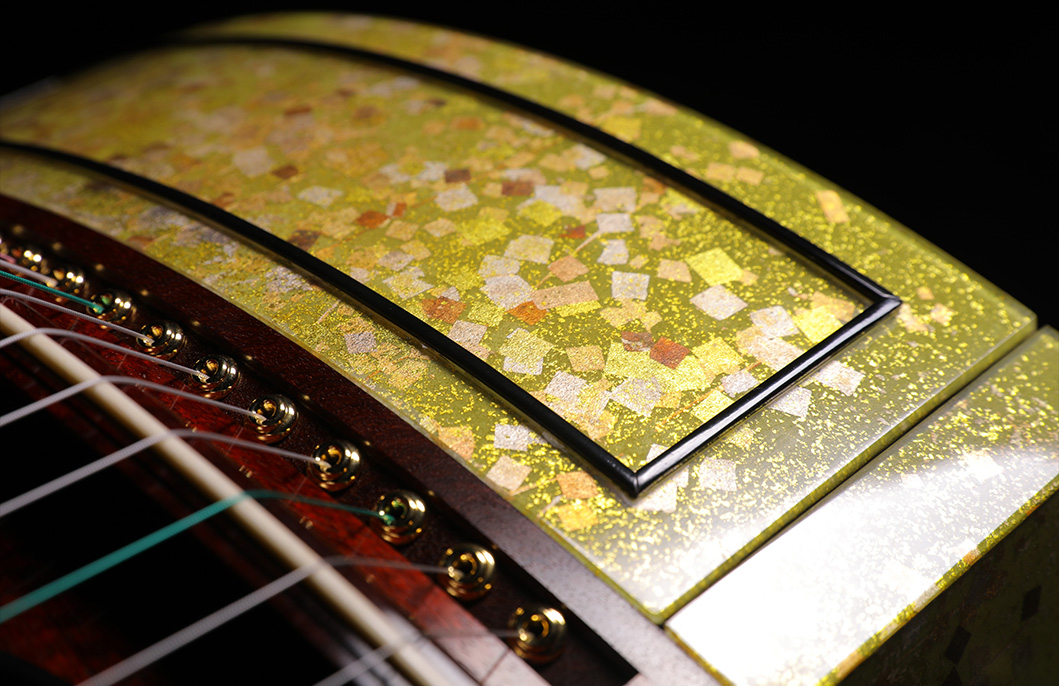
The material of the pierced thread hole is cast from 18K sterling Gold, making it durable and resistant to fading.
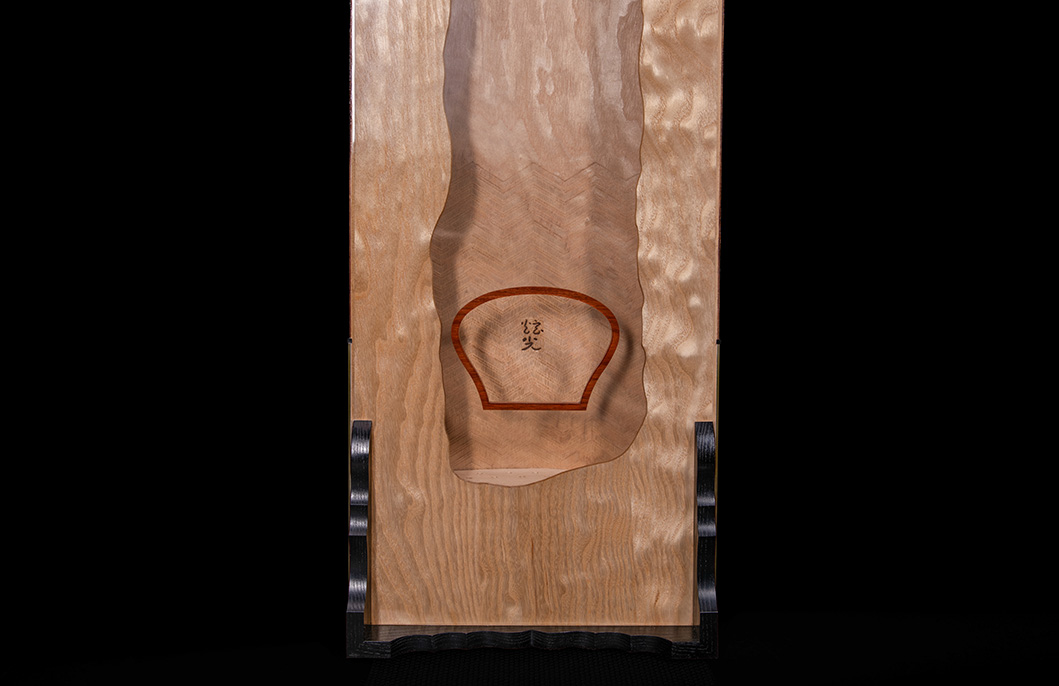
The craftsmanship of three-layer triangular carving takes twice as long as that of single-layer triangular carving, as the angles and precision required are extremely high. A slight misstep could necessitate starting the instrument from scratch. It's important to understand that the interior of the instrument is not flat but curved. In this context, handling triangular carving must take into account the curvature of the instrument while also considering the transmission of sound when played. The dual-layer carving increases the surface area of contact between the instrument's interior and the air, giving the sound more depth and resonance, with the overtones in this structure being more moving and captivating than those of other guzheng styles. The sound hole on the bottom plate is also framed with rosewood, enhancing the richness and fullness of the tone, preventing it from becoming disordered or scattered.
